Why Choose Anionic Soap for Effective Cleaning and Skin Care Benefits
The cleaning and personal care industry has seen significant advancements in recent years, leading to increased consumer awareness regarding the ingredients and efficacy of cleansing products. Among the various types of soaps available on the market, Anionic Soap has emerged as a preferred choice due to its superior cleaning capabilities and beneficial properties for skin care. According to the Global Specialty Chemicals Market report, the demand for effective cleaning agents has grown exponentially, propelled by a growing health-conscious consumer base and the rising incidences of skin-related issues, which has set the stage for the prominence of Anionic Soap.
Anionic Soap, characterized by its negatively charged molecules, is particularly effective in removing dirt, oil, and impurities from the skin and other surfaces. Each molecule possesses a hydrophobic tail that attracts oils and a hydrophilic head that bonds with water, making it an efficient surfactant. Research reported by the Journal of Surfactants and Detergents highlights that Anionic Soap can significantly enhance the foaming and cleansing performance compared to non-anionic counterparts. This unique property not only ensures thorough cleaning but also provides added benefits such as moisturizing effects, making it suitable for individuals with sensitive skin. As consumers increasingly prioritize both hygiene and skincare, the use of Anionic Soap is positioned to grow significantly in the personal care market.
Understanding Anionic Soap: Composition and Properties
Anionic soap, a type of soap characterized by its negatively charged ions, has become a staple in both personal and commercial cleaning solutions due to its unique composition and effective surfactant properties. Typically derived from fatty acids, anionic soaps feature a hydrophilic head that attracts water molecules and a hydrophobic tail that binds with grease and dirt, resulting in enhanced cleaning efficacy. According to a report by the Global Specialty Soap Market, anionic surfactants account for approximately 30% of the total market share, reflecting their popularity and effectiveness across various applications.
In terms of skin care benefits, anionic soaps offer not only superior cleansing capabilities but also exhibit mild antibacterial properties. Studies indicate that they can help in reducing microbial load on the skin, making them advantageous for individuals with acne-prone or sensitive skin. The Journal of Dermatological Science published findings showing that anionic surfactants can maintain an optimal pH balance, further protecting the skin barrier while effectively removing impurities. Additionally, the foaming action of anionic soap enhances the user experience, promoting more effective application and enjoyment during use. This combination of effective cleaning and skin care benefits underscores the reasons behind the growing preference for anionic soaps in both household and personal care products.
Why Choose Anionic Soap for Effective Cleaning and Skin Care Benefits
| Property |
Description |
Benefits |
| Composition |
Anionic soaps contain long-chain fatty acids and sodium or potassium salts. |
Effective in breaking down oils and dirt. |
| Cleansing Power |
Strong surfactant properties make them excellent for cleaning. |
Removes impurities effectively. |
| Skin Compatibility |
Typically mild and suitable for various skin types. |
Minimizes irritation and dryness. |
| Foaming Ability |
Anionic soaps generate a rich lather. |
Enhances the cleaning experience and efficacy. |
| Environmental Impact |
Biodegradable and less harmful to aquatic life. |
Safer choice for eco-conscious consumers. |
The Science Behind Anionic Surfactants in Cleaning
Anionic surfactants are pivotal in the cleaning industry due to their unique molecular structure that enhances cleaning efficacy. Characterized by their negatively charged head, anionic surfactants have an exceptional ability to attract and bind with positively charged dirt and grime. This interaction enables them to efficiently break down oils and stains, making them particularly effective in applications ranging from household cleaning products to industrial detergents. According to a report by the American Cleaning Institute, more than 75% of cleaning products on the market contain anionic surfactants, reflecting their widespread acceptance and effectiveness in achieving superior cleaning results.
The science behind anionic surfactants lies in their surface activity—reducing surface tension of water, which allows it to spread more easily across surfaces and penetrate soils. The unique balance between hydrophobic tails and hydrophilic heads leads to the formation of micelles, which encapsulate and carry away dirt and grease. Research published in the Journal of Surfactant Chemistry emphasizes the importance of anionic surfactants in formulating products that not only clean but also maintain skin health by avoiding skin irritation at effective concentrations. This evidence showcases how anionic soaps can provide beneficial skin care effects while maintaining their primary function as effective cleaning agents.
Advantages of Anionic Soap for Skin Care and Hygiene
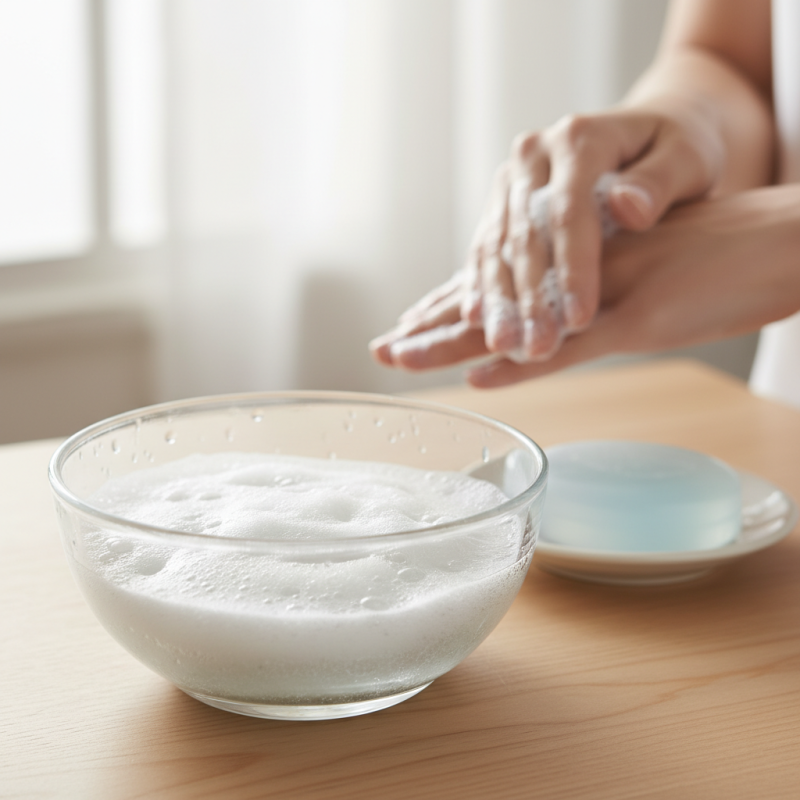
Anionic soap has become increasingly popular in skin care and hygiene due to its unique properties that cater to effective cleaning. Anionic surfactants carry a negative charge, which enhances their ability to bind with dirt, oil, and impurities on the skin, making them excellent for thorough cleansing. Unlike many traditional soaps, anionic soaps produce a rich lather that not only helps to lift away grime but also leaves the skin feeling fresh and invigorated.
One of the standout advantages of anionic soap is its effectiveness in maintaining healthy skin. This type of soap is generally milder than its counterparts, making it suitable for various skin types, including sensitive skin. Since anionic soaps do not strip away essential moisture, they help in preserving the skin's natural barrier while ensuring cleanliness. This quality makes them a great choice for daily use, especially for those prone to skin irritations or dryness.
Tips for incorporating anionic soap into your routine: Start by using it in the shower for an all-over clean; the lather will not only cleanse but also stimulate circulation. For facial care, consider using a diluted solution to avoid overwhelming sensitive skin. Always follow up with a moisturizer to lock in hydration, enhancing the benefits of the soap while keeping your skin soft and supple. By integrating these tips, you can harness the full potential of anionic soap for both hygiene and skin care.
Comparing Anionic Soap with Other Types of Soaps
When it comes to effective cleaning and skin care, anionic soap stands out when compared to other types of soaps. Anionic soaps, which contain negatively charged ions, work exceptionally well in breaking down oils and dirt. This characteristic makes them particularly effective for deep cleaning—removing stubborn residues that non-ionic or cationic soaps may leave behind. Non-ionic soaps tend to be milder and less effective at emulsifying oils, while cationic soaps often have antimicrobial properties but may leave skin feeling greasy.
Tips: For those with oily or acne-prone skin, choosing anionic soap can significantly improve your cleansing routine. Look for formulations that combine anionic properties with moisturizing agents to prevent over-drying. Always patch-test new products to ensure they suit your skin type, as everyone's skin reacts differently.
In addition to cleansing power, anionic soaps can enhance the overall skin care experience. Many contain beneficial additives, such as essential oils or natural extracts, that can provide additional skin nourishment. By opting for anionic soaps, users can enjoy a thorough clean without sacrificing the health of their skin. Regular use can lead to a clearer complexion, making it an excellent choice for individuals seeking both cleanliness and skin care benefits.
Tips: When using anionic soap, follow with a good moisturizer to maintain skin’s hydration levels. Additionally, incorporate gentle exfoliation into your routine to maximize the benefits of the soap and promote healthier skin texture.
Practical Applications of Anionic Soap in Daily Life
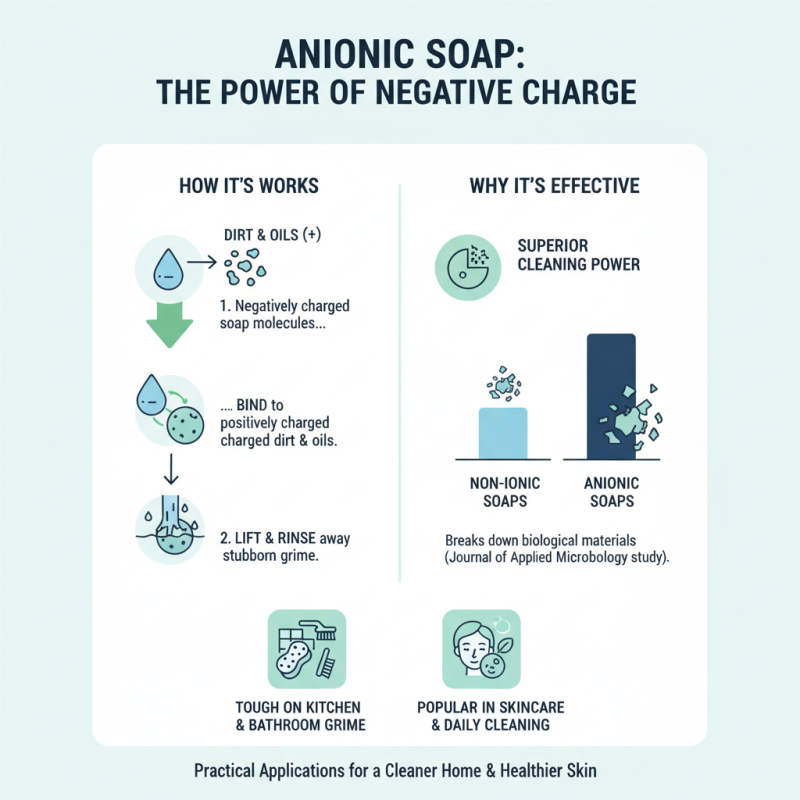
Anionic soap has become increasingly popular in both cleaning and skincare due to its unique properties that offer practical applications in daily life. Its negatively charged molecules effectively bind to positively charged dirt and oils, making it a powerful agent for removing stubborn stains from various surfaces. According to a study published in the Journal of Applied Microbiology, anionic soaps significantly outperform non-ionic options in breaking down biological materials, indicating their superior cleaning capabilities. This quality makes them particularly useful in households, where tough grime often accumulates in kitchens and bathrooms.
In skincare, anionic soaps provide additional benefits by promoting a healthier skin barrier. Research suggests that anionic formulas can help maintain the skin's natural pH balance, which is crucial for preventing irritations and maintaining moisture levels. Dermatologists often recommend these soaps for their ability to cleanse without stripping essential oils from the skin, thus supporting overall skin integrity. For those with sensitive skin, using anionic soap can be a gentler alternative to harsher cleansing agents, according to the American Academy of Dermatology.
**Tips:**
- For optimal results, use anionic soap combined with warm water to enhance its cleaning power.
- When choosing an anionic soap for skincare, look for options that are free from artificial fragrances and harsh chemicals to avoid irritation.
- Consider using anionic soap in your laundry routine; not only does it effectively remove stains, but it's also biodegradable, making it an eco-friendly choice.