How to Choose Sorbate Preservative at the 139th Canton Fair?
Choosing the right Sorbate Preservative is crucial for manufacturers. At the 139th Canton Fair, suppliers will showcase various options. Understanding your needs is key. Sorbate Preservative helps maintain product quality and safety.
When navigating a vast exhibition, consider your specific requirements. Look for suppliers with certifications like ISO and CE. These credentials ensure reliability and quality. The introduction of AI smart search will simplify your search. It allows you to find qualified suppliers quickly.
However, not all preservatives are the same. Some may not perform as expected. It's essential to ask questions and seek recommendations. Reflecting on previous choices can help you make a better decision this time. Take the time to explore options and think critically about your selection.
Understanding Sorbate Preservatives: Types and Applications
Sorbate preservatives are essential in the food and beverage industry. They help prevent spoilage and extend shelf life. Understanding the types of sorbates is crucial for effective application. The most common forms include potassium sorbate and sodium sorbate. These are known for their antifungal properties.
According to a recent industry report, the global market for food preservatives is expected to grow by 5% annually. Potassium sorbate occupies a significant share, mainly due to its wide application in fruits, dairy, and baked goods. However, choosing the right sorbate can be tricky. Miscalculating concentrations can lead to ineffective preservation. It’s essential to strike a balance between effectiveness and safety.
The usage limits set by regulatory bodies should also be on your radar. For instance, many products can only contain up to 0.1% potassium sorbate. Exceeding this limit might lead to adverse effects on consumer health. While sorbates are generally recognized as safe, the potential for allergic reactions exists in some individuals. Thus, transparency in ingredient usage is vital. Understanding your target market and their preferences will guide you in selecting the appropriate preservative.
Evaluating Quality Standards for Sorbate Preservatives
When selecting sorbate preservatives at the 139th Canton Fair, evaluating quality standards is crucial. Buyers should examine specifications like purity and concentration. A higher purity level usually indicates better quality. Sorbate preservatives need to meet food safety regulations. This ensures they are safe for consumption. Pay attention to the label details.
Not all suppliers have consistent standards. Some may prioritize cost over quality. It's essential to ask suppliers about their quality control processes. Look for certifications or lab test results. This information can reveal a lot about the product’s reliability.
Visiting several booths provides varied insights. Engage with different manufacturers and discuss their products. Ask probing questions about sourcing and production methods. Be aware of the common challenge of distinguishing between high and low-quality options. It's easy to get overwhelmed by options. Taking notes can help clarify choices later.
Factors to Consider When Choosing Sorbate Preservatives
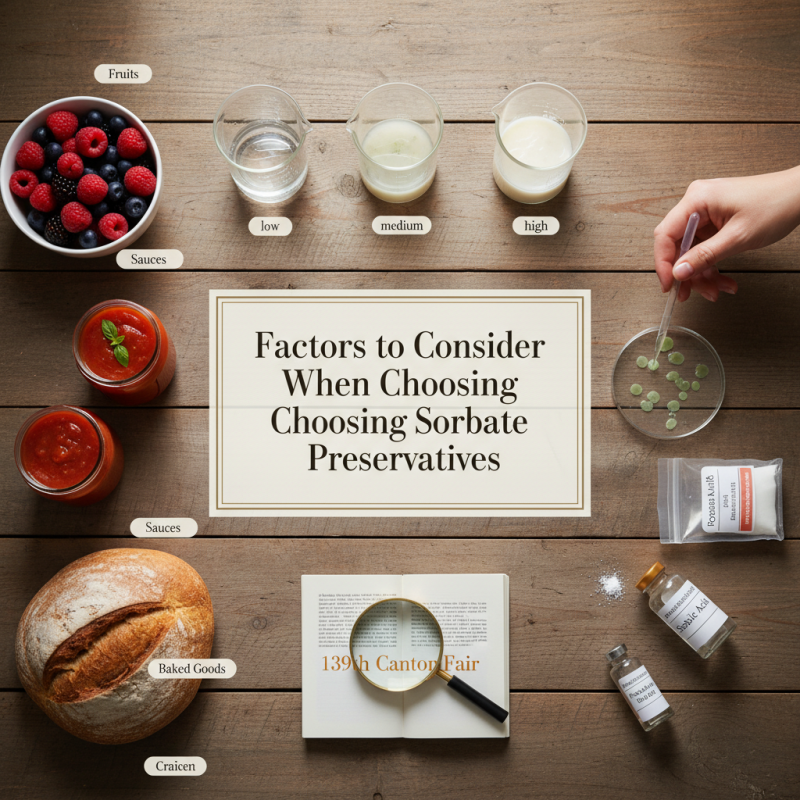
When selecting sorbate preservatives at the 139th Canton Fair, several factors must guide your decision. One key consideration is the type of food or product you are preserving. Fruits, sauces, and baked goods have unique preservation needs. Understanding these differences is crucial. The concentration of sorbate also plays a significant role. Insufficient amounts may fail to inhibit microbial growth, while excessive use can affect taste.
Another important factor is regulatory standards. Different regions have varying regulations on sorbate use. Compliance is essential to avoid potential legal issues. Also, consider the shelf-life of the product. A longer shelf-life often justifies higher investments in preservatives. Yet, it’s worth reflecting on whether the added cost aligns with the product's profit margin.
Finally, think about consumer preferences. Some people seek natural alternatives to synthetic preservatives. Balancing safety and consumer demand creates challenges. Sometimes, it’s harder than expected to find a solution that satisfies both the budget and the market's expectations.
Key Suppliers and Brands at the 139th Canton Fair
The 139th Canton Fair provides an excellent opportunity to explore sorbate preservatives. Numerous suppliers showcase their products in a bustling environment. Attendees can find various brands offering these crucial ingredients for food preservation. It’s essential to compare quality and pricing among different exhibitors.
As you navigate the fair, pay attention to the display setups. Some suppliers present detailed information about their sorbate preservatives. Others might have less clarity, leaving you questioning their product benefits. Don’t hesitate to ask questions. Engaging with the suppliers can reveal insights that brochures often miss.
Observe the interactions at their booths. Enthusiastic representatives usually indicate a commitment to quality. However, some may seem indifferent, which raises concerns. Take notes on your conversations. Evaluate the credibility and reliability of each supplier before making decisions. Finding the right sorbate preservative is critical for your needs.
Networking Opportunities to Discuss Sorbate Preservatives
The 139th Canton Fair offers a unique platform for networking. Attendees can discuss sorbate preservatives extensively. These preservatives are crucial in food and cosmetic industries. According to recent industry reports, the global sorbate preservative market is projected to reach $1.8 billion by 2027. Such growth highlights the importance of informed discussions at trade events.
Networking at the fair fosters connections among suppliers and manufacturers. Engaging with industry experts can illuminate the latest trends and applications. There might be gaps in knowledge regarding the effectiveness of different sorbate types. Specific sorbate formulations can vary significantly in performance. Discussing these discrepancies can lead to better choices in preservation techniques.
The fair also provides opportunities to address regulatory challenges. Some attendees may not be aware of regional regulations impacting sorbate use. Knowledge sharing can enhance compliance and product safety. Engaging in these conversations is vital for navigating the complexities of the market. Building relationships could lead to collaborative research and innovation in sorbate applications.
Sales Comparison of Sorbate Preservatives at the 139th Canton Fair