Leave Your Message

10 Essential Tips for Using Liquid Thickener Effectively?

Liquid Thickener can be a game-changer for many individuals, especially those with swallowing difficulties. Using it effectively is key for improving the eating experience. The right techniques can help create enjoyable meals without compromising safety or nutrition.

Adjusting Liquid Thickener accurately is crucial. Too much can make the texture unpleasant. Conversely, too little may not provide the desired consistency. Experimentation and finding the right balance is part of the learning curve. It's about making meals enjoyable while ensuring they are safe to consume.

Incorporating Liquid Thickener into various foods can enhance flavors. However, a careful approach is needed. Understand how it interacts with different liquids and dishes. Sometimes, it might not blend well, leading to an undesired outcome. Reflecting on these experiences will help you improve over time.

10 Essential Tips for Using Liquid Thickener Effectively?

Understanding the Purpose of Liquid Thickeners in Food and Beverages

Liquid thickeners serve a vital role in the culinary world. They adjust the viscosity of liquids, enhancing texture. This can make a dish more appealing and easier to consume. Many people, especially those with swallowing difficulties, benefit greatly from these thickeners. They help create a safe and enjoyable dining experience.

Understanding how to use liquid thickeners is crucial. Careful measurement is necessary. Too much thickener can create an unpleasant texture. It might turn a smooth soup into a gelatinous mass. Finding the right balance requires experimentation. When added gradually, thickeners can achieve the desired consistency.

Choosing the right thickener for different applications is challenging. Some thickeners work better in hot dishes, while others excel in cold ones. The flavor of the thickener can impact the final dish too. Testing various options can lead to surprising discoveries. It’s okay to make mistakes along the way. Each error provides a learning opportunity, refining one’s thickening skills.


Choosing the Right Type of Liquid Thickener for Your Needs

Choosing the right type of liquid thickener can be crucial for achieving the desired texture in your meals or drinks. There are various options available, each with unique properties. For instance, some thickeners are ideal for hot foods, while others work well in cold beverages. Did you know that starch-based thickeners can lose their effectiveness when reheated? This is a common mistake.

Consider your dietary needs when selecting a thickener. Some individuals may require gluten-free or low-carb options. It's essential to read the labels and understand the ingredients. Not everyone reacts the same way to thickening agents. Some may find certain thickeners can cause digestive discomfort. Testing small amounts first can be wise.

Texture is key when cooking, and finding the right thickener can enhance the experience. A thickener may alter the flavor of your dish. This unexpected change might require adjustments. Don't hesitate to experiment with different types. Observing how each thickener affects flavor and consistency can be enlightening. Sometimes, the perfect choice requires trial and error.

10 Essential Tips for Using Liquid Thickener Effectively

Tip Number Tip Description Recommended Use Considerations
1 Understand the different types of liquid thickeners available. For varied textures in foods and beverages. Check compatibility with your recipes.
2 Measure thickener accurately for consistent results. To achieve desired viscosity. Use a kitchen scale for precision.
3 Gradually add thickener to liquids while stirring. To avoid clumping. Ensure liquids are not too cold.
4 Allow time for thickeners to activate. For optimal texture. Different thickeners have varying activation times.
5 Taste the mixture before serving. Adjust seasoning if necessary. Thickeners can alter the flavor profile.
6 Choose the right thickener for dietary needs. For people with specific allergies or intolerances. Check ingredient labels carefully.
7 Experiment with different types for preferred texture. Enhance culinary creativity. Take notes to replicate successful tests.
8 Store thickeners properly to maintain quality. Ensure longevity and effectiveness. Avoid humidity and heat.
9 Communicate with caregivers about texture modifications. For safe dietary consumption. Record any feedback for adjustments.
10 Be patient and keep practicing. Mastering liquid thickeners takes time. Don’t hesitate to seek guidance if needed.

Step-by-Step Guide to Properly Measuring and Mixing Thickener

When mixing liquid thickener, precise measurement is crucial. Start by using a reliable measuring tool. A kitchen scale can provide accuracy. Measure your liquid and thickener carefully. This helps achieve the desired consistency.

Mixing can be tricky. Some might add thickener too quickly. This can lead to clumps forming. Instead, sprinkle the thickener gradually into the liquid. Stir continuously during this process. It might take time to reach the right thickness. Be patient; good things come to those who wait.

Note that not all thickeners behave the same way. Check the instructions for each type. You'll learn what works best through trial and error. Sometimes the first attempt isn't perfect. Reflect on these initial outcomes. Adjust your technique for better results next time.

Tips for Adjusting Thickness to Achieve Desired Consistency

10 Essential Tips for Using Liquid Thickener Effectively?

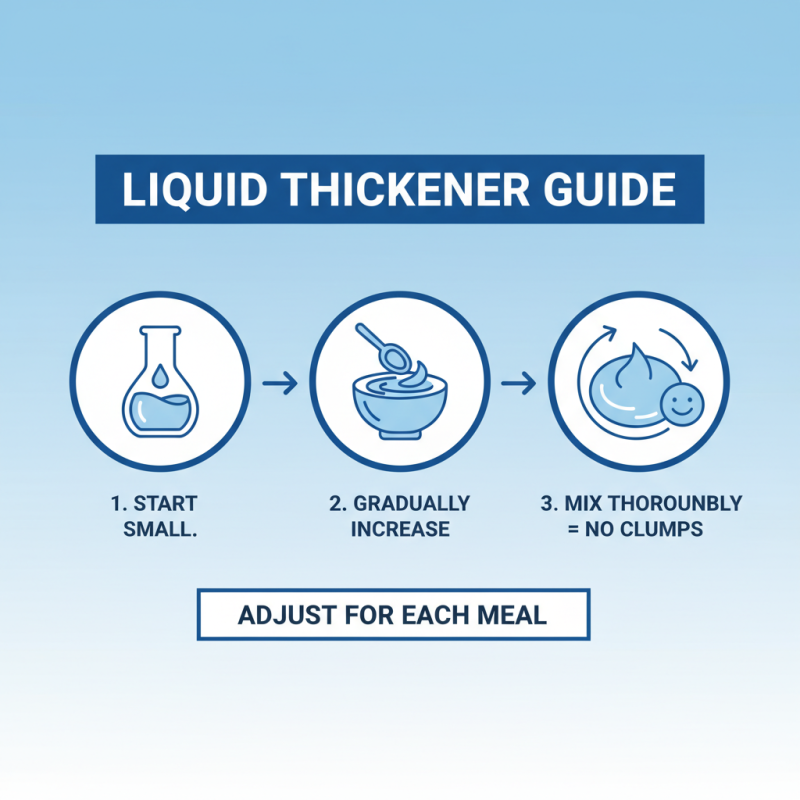
When using liquid thickener, adjusting the thickness is crucial. Each meal requires a unique consistency. Sometimes, it feels like an experiment. Start with a small amount of thickener. Gradually increase it. Mixing thoroughly can help you avoid clumps.

Different liquids behave differently. Water, juice, and broth may thicken at varying rates. Pay attention to those differences. Sometimes the desired thickness is elusive. If the mix looks too thin, add more. On the other hand, if it becomes too thick, dilute it slightly with water.

Taste matters. Consistency can affect flavor perception. Over-thickening can mask the taste of ingredients. Strive for balance. Serve the dish and observe reactions. Is it too thick for some? Does it spill over the edge? Adjust based on feedback. These trial and error moments are valuable for making future meals successful.

Storing and Using Leftover Liquid Thickener Safely and Effectively

Storing leftover liquid thickener safely is crucial. Many health professionals emphasize proper storage techniques. Liquid thickeners are sensitive to contamination. A study shows that nearly 30% of foodborne illnesses are due to improper food handling. Ensure that any leftover thickener is sealed tightly.

Refrigerate any unused portion immediately. Check temperatures; your refrigerator should be at or below 40°F (4°C). Quality may degrade after a few days. Always label the container with the date. This simple act can help track freshness. Experts recommend using leftovers within a week for optimal safety.

When using thickener next time, give it a good shake. Thickening agents sometimes separate. This separation can lead to an uneven texture in food. If you notice changes in smell or appearance, discard it. Remember, it's about safety and quality. Keeping a log can help identify when the thickener was last used, preventing waste and ensuring better usage.