How to Identify Essential Grease Manufacturing Raw Materials?
The grease manufacturing industry plays a pivotal role in various sectors, including automotive and industrial applications. In recent years, the demand for high-quality grease has surged. According to a report by Grand View Research, the global grease market is projected to reach USD 5.36 billion by 2025. Understanding the essential grease manufacturing raw materials is crucial for industry stakeholders.
Dr. Amy Thompson, a renowned expert in lubrication technology, states, "The selection of the right raw materials defines the performance and quality of the final grease product." This emphasizes the importance of carefully identifying and sourcing these materials. Base oils, thickeners, and additives are key components. Each of these raw materials affects viscosity, stability, and performance.
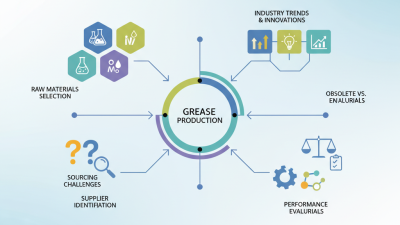
However, the landscape of grease manufacturing is not without its challenges. Suppliers of raw materials can vary significantly in quality. Some materials may not meet the necessary standards, leading to performance issues in the final product. Manufacturers must remain vigilant in their sourcing processes to ensure reliability and consistency. Therefore, a thorough understanding of grease manufacturing raw materials is essential for achieving optimal product performance.

Understanding the Role of Raw Materials in Grease Production
When it comes to grease production, raw materials play a critical role in determining performance and quality. The primary components include base oils, thickening agents, and additives. Base oils make up 70-90% of the final product. According to a 2022 industry report, the choice of base oil can affect viscosity and temperature stability. Common base oils include mineral oils and synthetic counterparts.
Thickening agents are essential for achieving the desired consistency. They usually comprise 5-30% of the grease formulation. Lithium soap is a widely used thickener due to its reliability. Research indicates that greases with lithium-based thickeners often outperform other types in terms of mechanical stability. However, the choice of thickener can introduce challenges, such as compatibility with different base oils.
Additives enhance specific properties of the grease. They can include anti-wear additives and antioxidants. Even a small concentration of these could significantly improve performance. A recent market analysis highlighted that 25% of users reported issues with additive compatibility, leading to unexpected performance failures. Careful selection of these raw materials is crucial for optimal formulation.
Key Properties of Base Oils Used in Grease Manufacturing
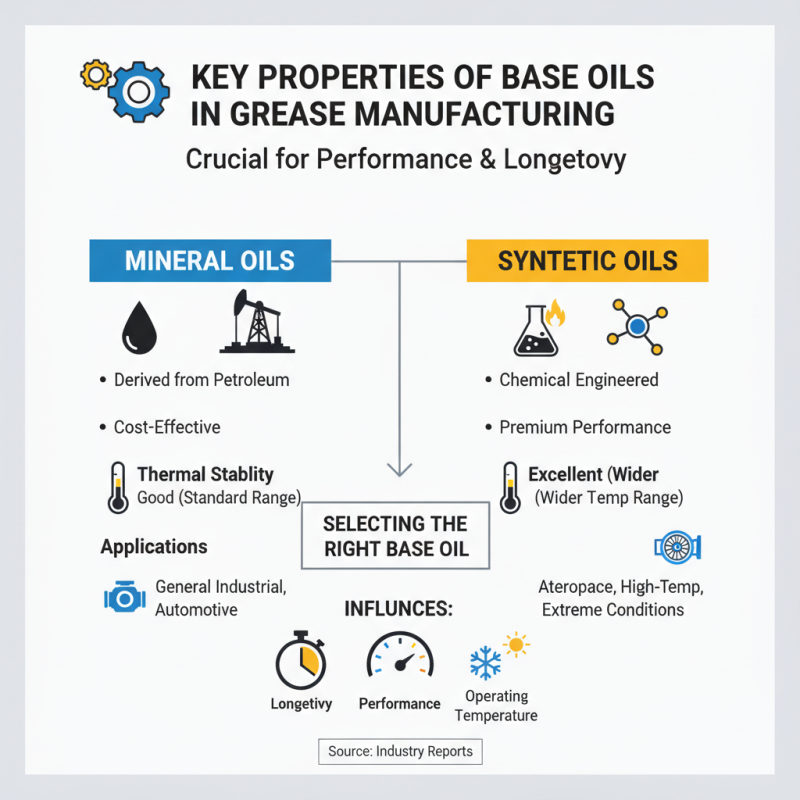
Selecting the right base oils is crucial in grease manufacturing. These oils significantly influence the grease's performance and longevity. Typically, base oils are categorized into mineral and synthetic types. Mineral oils are derived from petroleum, while synthetic oils are chemically engineered. Industry reports show that synthetic base oils have excellent thermal stability and a wider operating temperature range.
The viscosity of the base oil is a vital property. It dictates how easily the grease flows under different temperature conditions. For example, higher viscosity oils are better for heavy-load applications. However, they may perform poorly in extremely low temperatures. According to the National Lubricating Grease Institute, the right viscosity index can improve lubrication efficiency by up to 30%.
**Tip:** Always conduct thorough testing of various base oil viscosities under actual operating conditions. Don't overlook the impact of additives. They can enhance the properties of the base oil, improving its performance and protection against wear and tear.
One area worth noting is environmental considerations. The sustainability of base oils has become increasingly important. While synthetic oils often perform better, they may pose sustainability challenges. Balancing performance and environmental impact continues to be a topic of active discussion in the industry. Understanding these key properties will help manufacturers choose the best raw materials for their grease formulations.
Identifying Additives to Enhance Grease Performance
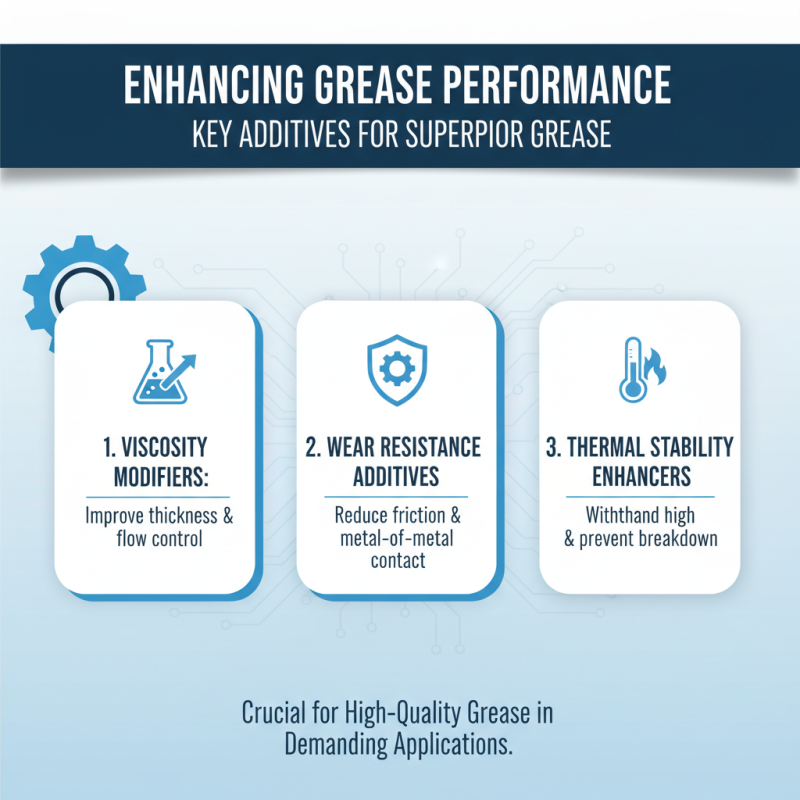
When producing high-quality grease, selecting the right additives is crucial. Additives enhance grease performance to meet demanding applications. These components can improve properties like viscosity, wear resistance, and thermal stability.
Common additives include anti-wear agents, which protect surfaces under pressure. They form protective films that reduce friction. Antioxidants are also essential. They prevent oxidation, which can degrade grease over time. However, the balance is delicate. Too many additives can negatively affect performance.
Choosing the right combination is challenging. Not all additives work well together. It's necessary to consider the specific application environment. Testing is vital. Lab trials often reveal unexpected interactions. Relying solely on theoretical knowledge may lead to missteps. Experience in formulating grease plays a significant role in achieving optimal performance.
Assessing the Quality and Purity of Raw Materials
When it comes to grease manufacturing, assessing the quality and purity of raw materials is crucial. Improper materials can lead to failures in products. Purity directly affects performance and longevity. Contaminants can significantly alter the characteristics of the finished grease.
Look for suppliers who provide detailed material safety data sheets. These should outline the chemical composition. Additionally, certifications from recognized industry standards can offer reassurance about quality. Testing for viscosity, flash point, and chemical stability helps ensure the materials meet specific requirements. Regular audits and inspections of suppliers enhance reliability.
The relationship with suppliers matters. Building trust is essential for consistent quality. Open communication channels can help address any concerns. While imperfections in supplier materials can arise, having a contingency plan ensures minimal disruption. Emphasizing transparency creates a safer manufacturing environment. Quality assessment is not a one-time task; it requires ongoing diligence and refinement.
How to Identify Essential Grease Manufacturing Raw Materials? - Assessing the Quality and Purity of Raw Materials
| Raw Material |
Quality Criteria |
Purity Level (%) |
Supplier Origin |
Storage Conditions |
| Lithium Soap |
Color, Consistency, Stability |
95 |
USA |
Cool, Dry Place |
| Calcium Soap |
Viscosity, Homogeneity, Apparent Density |
98 |
Germany |
Room Temperature |
| Aluminum Complex |
Thixotropic Behavior, Dropping Point |
90 |
China |
Airtight Containers |
| Barium Complex |
Chemical Composition, Burn-Test Residue |
92 |
Italy |
Cool, Ventilated Area |
| Graphite |
Particle Size, Purity Verification |
97 |
Brazil |
Moisture-Free Environment |
Sourcing Sustainable and Cost-Effective Grease Components
Sourcing sustainable and cost-effective grease components is crucial for manufacturers. Selecting the right raw materials involves understanding their properties and environmental impact. Natural oils, for example, are renewable but can vary in performance. Synthetic alternatives often offer better consistency but at a higher cost. It’s vital to evaluate both options thoroughly.
Additionally, the sourcing process needs transparency. Engaging with suppliers who prioritize sustainability can lead to better products. Often, the cheapest option leads to subpar performance and less reliability. Authentic partnerships with trusted suppliers create a more resilient supply chain. As manufacturers, we must reflect on our choices regularly.
Another consideration is the balance between cost and performance. While budget constraints are real, investing in quality materials is critical. A low-cost ingredient might save money upfront but can cause failures later. The long-term health of machinery often depends on the quality of grease used. It’s a continuous cycle of assessing needs and outcomes in our selection process.
Essential Grease Manufacturing Raw Materials
This chart illustrates the key raw materials essential for grease manufacturing along with their average cost and sustainability rating.