Isopropyl Palmitate Benefits Uses and Key Tips for Skin Care?
Isopropyl Palmitate is gaining attention in the skincare industry for its versatile benefits. Renowned skincare expert Dr. Emily Carter states, “Isopropyl Palmitate enhances absorption and improves moisture retention.” This highlights its importance in cosmetic formulations.
This ingredient is derived from natural sources, making it appealing to consumers. Isopropyl Palmitate acts as an emollient, leaving skin feeling soft and hydrated. However, not all products containing this compound are created equal. Quality matters significantly.
Some users report irritation, signaling the need for caution. It's essential to patch-test products containing Isopropyl Palmitate before full application. Understanding your skin's unique needs is key. As the industry evolves, ongoing research will further illuminate Isopropyl Palmitate's role in skincare.
What is Isopropyl Palmitate and Its Origin?
Isopropyl Palmitate is a colorless, odorless ester derived from isopropyl alcohol and palmitic acid. This compound is primarily used in skin care formulations. Its origins trace back to the fatty acids in palm oil. It is recognized for its emollient properties, which help to smooth and soften the skin.
The cosmetic industry has seen a growing interest in Isopropyl Palmitate. According to a report by Grand View Research, the global skin care market is projected to reach $189.3 billion by 2025. Ingredients like Isopropyl Palmitate play a key role in product formulations. They enhance the skin feel and help other active ingredients penetrate better. Despite these benefits, some individuals may experience sensitivity. It’s essential to patch test due to potential reactions.
For optimal use, Isopropyl Palmitate should be combined with other skin-nourishing ingredients. A study in the Journal of Cosmetic Science emphasized the importance of formulation balance. Over-reliance on emollients can lead to less effective results. Finding the right combination is crucial. While it offers many positive attributes, not every formulation will yield desired results for every skin type.
Key Benefits of Isopropyl Palmitate in Skin Care
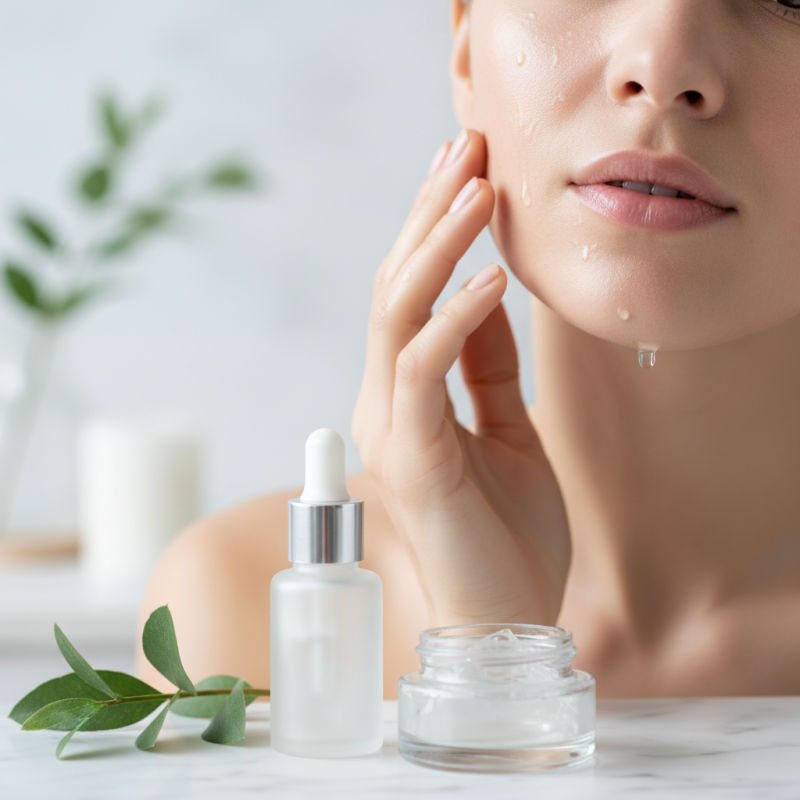
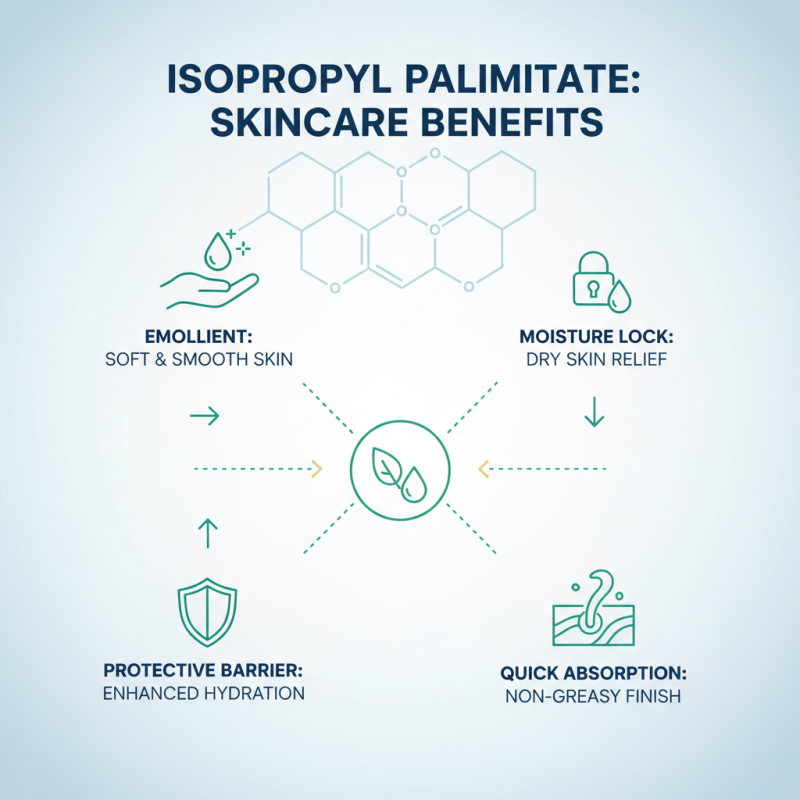
Isopropyl Palmitate is a significant ingredient in skin care. It acts as an emollient, providing a soft and smooth feel on the skin. This compound helps to lock in moisture, making it ideal for dry and flaky skin. When applied, it creates a protective barrier that can enhance hydration levels. Many appreciate how it absorbs quickly without a greasy residue.
Moreover, Isopropyl Palmitate can improve the spreadability of creams and lotions. This means products can glide easily over the skin. It helps with the overall texture of formulations. However, some might find it comedogenic, leading to breakouts. It’s essential to patch test before a full application. Understanding your skin type is vital.
Incorporating Isopropyl Palmitate into your routine might take some trial and error. Different skin types react uniquely, so what works for one may not work for another. Take time to observe how your skin responds. Adjust your usage if needed, and seek advice if unsure. Balancing hydration and avoiding irritation is key to achieving healthy skin.
Common Uses of Isopropyl Palmitate in Cosmetic Products
Isopropyl Palmitate is a common ingredient in many cosmetic products. Its structure allows it to act as an emollient and occlusive agent. This means it helps to lock in moisture and create a smooth feel on the skin. You might find it in lotions, creams, and other skincare items. The silky texture it offers can enhance the overall experience of using these products.
When it comes to its uses, Isopropyl Palmitate is especially effective in formulations for dry skin. It adds a layer of hydration, making skin feel softer. It’s often included in products like body butters and facial moisturizers. However, some people may experience sensitivity. It's essential to test products containing this ingredient, especially on sensitive skin.
There are also more unconventional uses. It can be found in makeup bases, giving a nice finish. Some formulations even utilize it as a solvent for other ingredients. However, its functionality can sometimes lead to a heavy feel if not balanced properly. Users should pay attention to how their skin reacts over time.
How to Incorporate Isopropyl Palmitate into Your Skincare Routine
Incorporating isopropyl palmitate into your skincare routine can elevate your skin health. This emollient offers hydration and improves texture. Start by checking your skin type. If you have oily skin, use it sparingly. A little goes a long way. Mix a few drops into your moisturizer. This creates a smoother application.
You can also blend isopropyl palmitate into DIY face masks. It helps other ingredients absorb better. Choose natural ingredients like honey or aloe vera. Ensure you patch test first. Sometimes, reactions occur even with gentle products. If irritation arises, it’s best to stop using it.
Finally, try using it at night. Your skin repairs itself while you sleep. It may feel heavy initially. But with consistent use, your skin may appear softer and more radiant. Just be mindful of your skin's needs. Adjust the amount as necessary.
Important Tips for Using Isopropyl Palmitate Safely
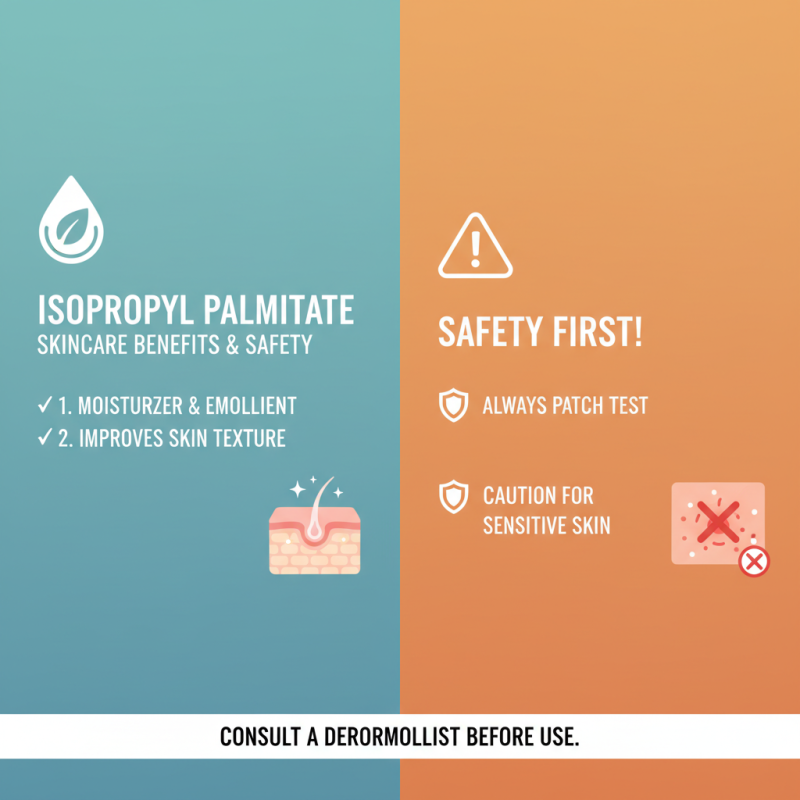
When using Isopropyl Palmitate, safety should be a top priority. This ingredient can be quite beneficial for skin care. It acts as a moisturizer and can improve skin texture. However, it is important to be cautious. Always conduct a patch test before trying it on larger areas. Some individuals may experience irritation, especially those with sensitive skin.
Using Isopropyl Palmitate in moderation is key. A little goes a long way. Applying too much can lead to clogged pores. This can result in breakouts rather than the desired smoothness. Pay attention to how your skin reacts after initial use. Adjust the amount based on your skin's needs and reactions.
Storage is another consideration. Isopropyl Palmitate should be kept in a cool, dry place. Make sure the container is tightly sealed. Improper storage can affect the ingredient's efficacy. If you notice any changes in smell or texture, it’s best to discard it. Always prioritize freshness for effective results.