What are Polysorbate Emulsifiers and Their Uses in Food?
Polysorbate emulsifiers play a vital role in the food industry. These compounds help blend oil and water, creating stable mixtures. Foods like ice cream, salad dressings, and sauces often contain polysorbate emulsifiers. They enhance texture and consistency, making products more enjoyable.
Despite their benefits, there are concerns about these additives. Some people may experience allergies or sensitivities. Additionally, the long-term effects of consuming polysorbate emulsifiers are not fully understood. This leaves room for reflection on their safety in our diets.
Consumers should be aware of what they eat. Understanding polysorbate emulsifiers can help them make informed choices. Balancing enjoyment and health is crucial. Ultimately, knowing the roles of additives leads to better food choices.
What are Polysorbate Emulsifiers?
Polysorbate emulsifiers are widely used in the food industry. They serve as stabilizers and help blend water with oil. These emulsifiers have a polyoxyethylene backbone that improves texture and shelf life. According to a 2021 report by the Food Emulsifiers Association, polysorbates accounted for nearly 25% of all emulsifier usage in food products.
These emulsifiers enhance the mouthfeel of sauces and dressings. In ice creams, they create a smoother consistency. However, some consumers raise concerns about their safety and potential side effects. Research indicates that polysorbates may affect gut health. A recent study linked high consumption to alterations in gut microbiota, prompting further investigation.
Polysorbate 80 and similar compounds can facilitate better absorption of certain vitamins. Yet, with increased usage, the question of cumulative effects arises. Manufacturers need to reflect on consumer awareness and preferences. Transparency in ingredient labeling grows ever more essential as awareness increases. The challenges in finding a balance between functionality and health concerns remain significant.
What are Polysorbate Emulsifiers and Their Uses in Food?
| Emulsifier Type |
Common Uses |
Functionality |
Examples of Food Products |
| Polysorbate 20 |
Salad dressings, sauces |
Stabilizes emulsions, improves texture |
Mayonnaise, vinaigrettes |
| Polysorbate 60 |
Baked goods, creams |
Enhances volume, increases shelf life |
Cakes, whipped toppings |
| Polysorbate 80 |
Ice cream, dairy products |
Boosts creaminess, prevents crystallization |
Ice cream, butter |
| Polysorbate 65 |
Frozen desserts |
Improves texture, enhances stability |
Frozen yogurt, sorbet |
Chemical Composition of Polysorbates
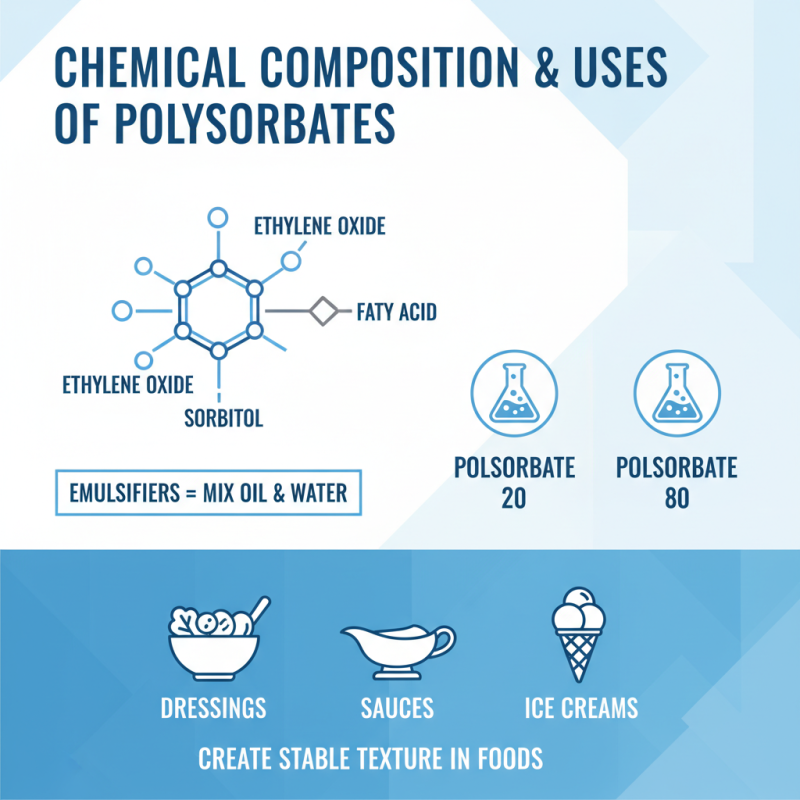
Polysorbates are a type of emulsifier commonly used in food production. They are made from a combination of sorbitol, ethylene oxide, and fatty acids. This chemical structure contributes to their ability to mix oil and water, which is essential in many food products. Polysorbate 20 and Polysorbate 80 are popular examples. They help achieve a stable texture in dressings, sauces, and ice creams.
The unique chemical composition of polysorbates allows them to perform effectively in varying environments. They create a barrier that prevents separation, ensuring uniformity. Yet, their synthetic nature raises questions about long-term health effects. Some consumers may be uneasy about ingesting artificial additives. While polysorbates enhance food quality, their impact on health remains a topic for reflection. More research is needed to understand their safety in diets.
Despite their advantages, the culinary world grapples with balancing food quality and health concerns. The art of cooking often embraces natural ingredients, fostering a shift towards cleaner labels. As we innovate in food technology, reflections on the use of polysorbates may lead us to seek healthier alternatives. Ultimately, the choices made today will shape future food experiences.
Common Types of Polysorbate Emulsifiers
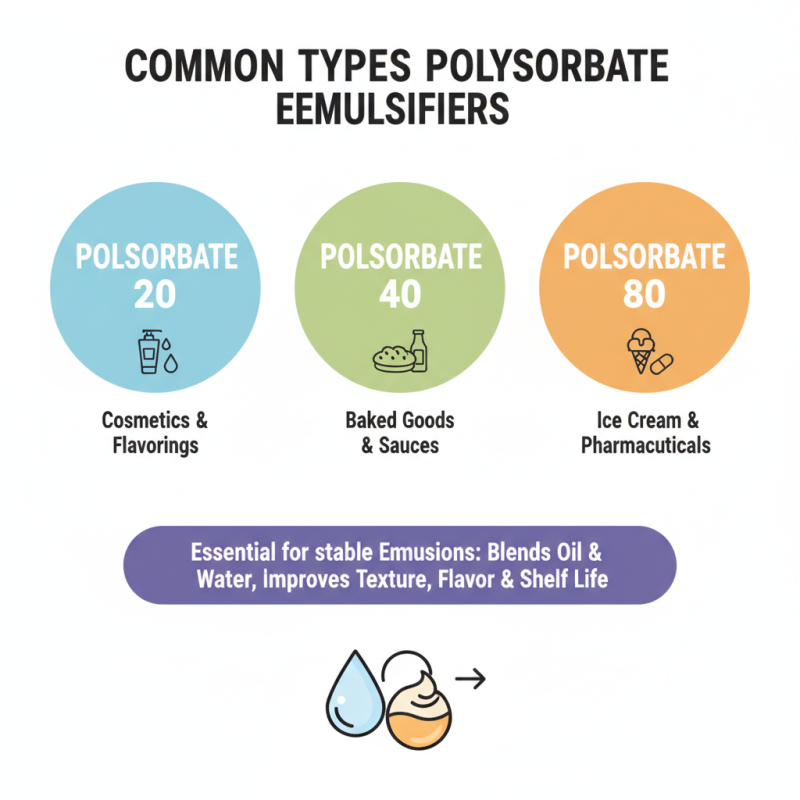
Polysorbate emulsifiers are essential in food production. They help mix oil and water, creating stable emulsions. These emulsifiers improve texture, flavor, and shelf life. Common types include Polysorbate 20, Polysorbate 40, and Polysorbate 80. Each variant serves different purposes.
Polysorbate 20 is often found in baked goods. It enhances moisture retention and texture. Meanwhile, Polysorbate 40 is used in frozen desserts. It aids in maintaining a smooth consistency. Polysorbate 80 is popular in sauces and dressings. It helps prevent separation and improves mouthfeel.
However, the use of polysorbates raises questions. Some consumers worry about potential health effects. Understanding their roles and safety is crucial. It's essential to evaluate whether these additives align with personal dietary choices. Knowledge empowers informed decisions about what we consume.
Functions of Polysorbate Emulsifiers in Food Products
Polysorbate emulsifiers play vital roles in food products. These compounds help blend oil and water, creating stable mixtures. According to a recent industry report, polysorbates are found in over 10% of processed food items globally. They ensure uniform texture and consistency, enhancing the overall eating experience.
In many cases, polysorbates assist in improving the shelf life of various food products. They prevent separation and maintain quality during storage. Some studies indicate that polysorbate 80 is effective in stabilizing ice cream and salad dressings. These emulsifiers provide a creamy mouthfeel that consumers prefer.
Tip: When choosing food products, pay attention to ingredient labels. Remember that not all emulsifiers are created equal. While polysorbates are widely used, some may cause digestive discomfort in sensitive individuals.
Polysorbate emulsifiers also raise some concerns. Their long-term effects are still under review. Some consumers are wary of consuming synthetic additives. It's important to balance convenience with health. Consider whole foods or products with fewer ingredients.
Polysorbate Emulsifiers in Food Products
Safety and Regulatory Status of Polysorbates in Food Industry
Polysorbate emulsifiers are widely used in the food industry for their ability to stabilize mixtures. They can help blend ingredients like oil and water effectively. However, their safety has come into question. Regulatory bodies closely monitor their use in food products.
The FDA and EFSA classify polysorbates as generally recognized as safe (GRAS). Yet, some studies suggest potential health concerns with high consumption. These concerns revolve around possible allergic reactions and gut health effects. Such findings urge caution when using these emulsifiers.
Consumers should be aware of these additives in ingredient lists. Transparency is crucial for informed choices. As the food industry evolves, ongoing research and regulation changes may influence polysorbate usage. It's essential to stay informed about potential impacts on health.