2026 Top Isopropyl Palmitate Uses and Benefits for Buyers?
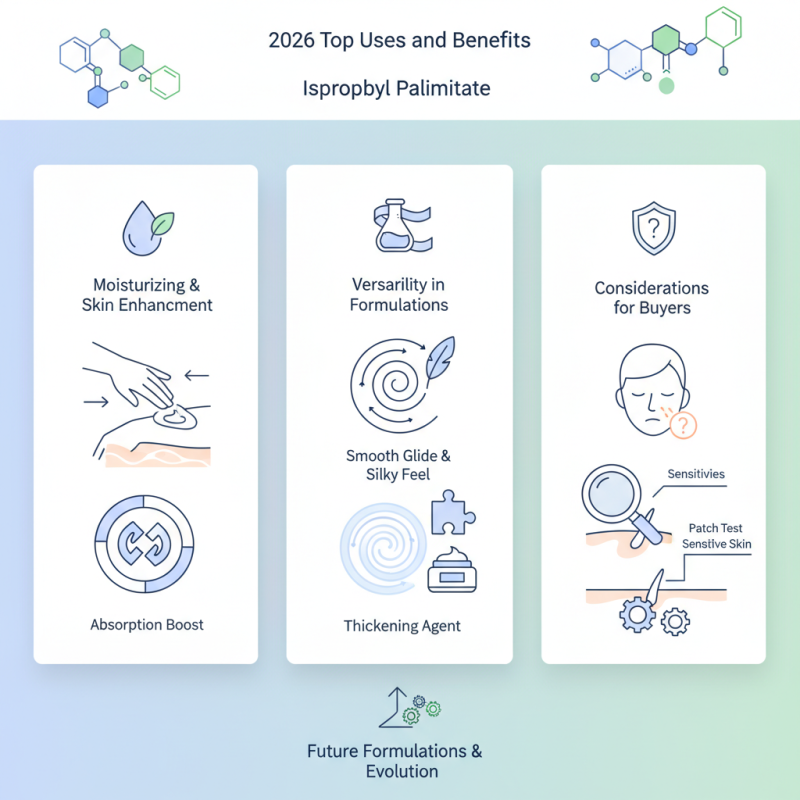
Isopropyl Palmitate is an ester derived from isopropyl alcohol and palmitic acid. It plays a significant role in various industries, particularly in cosmetics and personal care products. Many buyers seek its benefits, including moisturizing properties and skin absorption enhancement.
The versatility of Isopropyl Palmitate makes it popular among formulators and consumers alike. It helps products glide smoothly on the skin, creating a silky feel. This ingredient also acts as a thickening agent, improving the texture of lotions and creams. Moreover, it can enhance the effectiveness of active ingredients.
Despite its advantages, some users may experience sensitivities. Not everyone reacts the same way to cosmetic ingredients. It’s crucial for buyers to test products containing Isopropyl Palmitate, especially those with sensitive skin. Understanding its benefits and potential drawbacks can help make informed choices. The future holds exciting prospects for this compound as formulations evolve.
Overview of Isopropyl Palmitate and Its Chemical Properties
Isopropyl palmitate, a fatty acid ester, features in many formulations. Its chemical structure is derived from isopropyl alcohol and palmitic acid. This compound is non-greasy and serves as an effective emollient. It creates a smooth texture in cosmetic and skincare products. Additionally, it plays a role in improving product spreadability.
According to industry reports, the global demand for isopropyl palmitate is rising. The cosmetic industry is the largest consumer, accounting for approximately 45% of its use. The compound enhances the sensory experience of topical products. In formulations, it helps stabilize oils and allows better absorption by the skin. This broad applicability contributes to its popularity.
Some manufacturers report challenges in sourcing high-quality isopropyl palmitate. Quality inconsistencies can affect the final product performance. Additionally, consumers are becoming more aware of ingredient safety and sustainability. This awareness prompts buyers to scrutinize the sources of isopropyl palmitate. Ensuring quality and reliability remains a priority in the industry. The focus is on transparent sourcing and responsible manufacturing practices.
2026 Top Isopropyl Palmitate Uses and Benefits for Buyers
| Use |
Benefits |
Industry |
Chemical Properties |
| Skin Conditioning Agent |
Moisturizes and softens skin |
Cosmetics |
Non-greasy, emollient |
| Solvent |
Enhances product stability |
Pharmaceuticals |
Lipophilic properties |
| Emulsifier |
Improves texture and consistency |
Food Industry |
Stable under a variety of conditions |
| Thickening Agent |
Enhances viscosity |
Personal Care |
Transparent and clear |
| Surfactant |
Reduces surface tension |
Household Cleaning |
Biodegradable and non-toxic |
Common Applications of Isopropyl Palmitate in Various Industries
Isopropyl palmitate is a versatile ingredient across various industries. This compound serves primarily as an emollient in personal care products.
It helps moisturize and soften skin, improving overall texture. Additionally, isopropyl palmitate functions as a solvent, assisting in the dissolution of active ingredients. This enhances the efficacy of formulations.
In the pharmaceutical realm, isopropyl palmitate finds its application in drug delivery systems. It acts as a penetration enhancer, allowing for better absorption of medications through the skin. Such properties increase therapeutic effectiveness.
However, not all formulations benefit uniformly. Some may experience stability issues, requiring careful testing to determine suitability.
In the food industry, isopropyl palmitate serves as a flavoring agent and emulsifier. It helps blend various components, improving consistency in culinary creations. Yet, it’s essential to note that not all products using isopropyl palmitate are regarded as safe for every consumer.
Quality checks are vital here. The diverse applications highlight isopropyl palmitate’s relevance, though challenges in formulation persist.
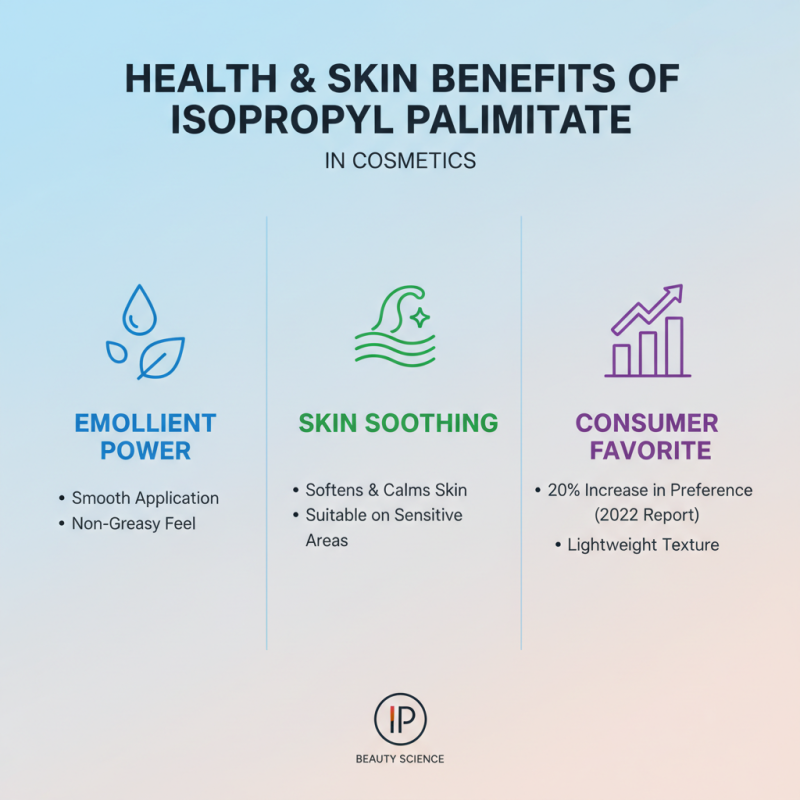
Health and Skin Benefits of Isopropyl Palmitate in Cosmetics
Isopropyl Palmitate, often found in beauty products, is praised for its versatility. It acts as an emollient, providing a smooth application on the skin. Its lightweight texture helps to soften and soothe the skin, making it suitable for sensitive areas. According to a 2022 industry report, products containing Isopropyl Palmitate have seen a 20% increase in consumer preference due to these benefits.
In cosmetics, Isopropyl Palmitate serves multiple roles. It enhances the spreadability of creams and lotions, ensuring even coverage. Many skincare formulators rely on it for its ability to dissolve other ingredients. This characteristic fosters the absorption of vitamins and active substances into the skin, making formulations more effective. Research shows it can improve moisture retention in the skin, creating a barrier against environmental stressors.
**Tips:** Always check the ingredient list. Some may have sensitivities to isopropyl compounds. Patch testing a new product containing Isopropyl Palmitate can be essential for safety. Not all formulations utilize it effectively. Therefore, understanding product composition helps to avoid disappointment.
Isopropyl Palmitate Usage Guidelines for Buyers and Manufacturers
Isopropyl Palmitate, a common ester, delivers numerous benefits in various industries, particularly in cosmetics and personal care. Manufacturers often favor this compound due to its emollient properties. It can enhance skin texture, leading the skin care market to grow at a projected CAGR of 5.5% through 2025, according to recent industry reports.
Understanding usage guidelines is crucial for optimal formulation. Isopropyl Palmitate typically acts as a solvent or carrier agent. It should be blended with other ingredients to maximize its effectiveness without compromising product stability. The ideal concentration generally ranges from 1% to 10%, depending on the desired application. While it offers versatility, improper ratios can lead to greasy textures or reduced efficacy.
Manufacturers need to test formulations thoroughly. Variability in skin types can affect product performance. For example, certain combinations may not be suitable for sensitive skin. This can limit the compound's broader applicability. Regular market analysis and consumer feedback can help mitigate these challenges, ensuring that products meet the diverse needs of users.
2026 Top Isopropyl Palmitate Uses and Benefits