Leave Your Message

Top 10 Nonionic Surfactants for Global Procurement Needs?

In the dynamic realm of industrial applications, Nonionic Surfactants play a vital role. Their versatility in various formulations is unmatched. Dr. Emily Tran, a renowned expert in surfactant chemistry, once stated, "The future of many industries hinges on the efficiency of Nonionic Surfactants." This highlights their importance in global procurement.

Many companies rely heavily on Nonionic Surfactants for cleaning products, cosmetics, and more. Their ability to stabilize emulsions and reduce surface tension makes them indispensable. However, challenges exist. Not all Nonionic Surfactants are created equal. Variability in quality and sourcing can lead to inconsistencies in product performance.

Organizations must remain vigilant. Thorough research is essential when selecting the right Nonionic Surfactant. Understanding supplier capabilities and background strengthens procurement decisions. With an informed approach, companies can navigate the complexities of the market.

Top 10 Nonionic Surfactants for Global Procurement Needs?

Overview of Nonionic Surfactants and Their Importance in Global Procurement

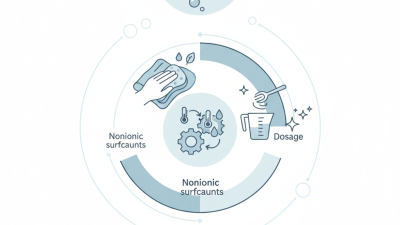
Nonionic surfactants play a crucial role in various industrial and consumer applications. These compounds, characterized by their lack of a charge, exhibit excellent wetting, emulsifying, and dispersing properties. According to industry reports, the global market for nonionic surfactants is projected to grow significantly, driven by rising demand in the personal care, food processing, and agricultural sectors. The versatility of nonionic surfactants makes them essential for formulating products that require stable emulsions or effective cleaning solutions.

In terms of procurement, understanding the specific properties of these surfactants is vital. Factors to consider include hydrophilic-lipophilic balance (HLB), viscosity, and compatibility with other ingredients. Many businesses overlook these technical details, impacting product performance. For example, selecting a surfactant with an inappropriate HLB may lead to instability in emulsions, causing product failure.

**Tips:** When sourcing nonionic surfactants, always request a technical data sheet. Pay attention to how surfactants behave in different formulations. Regularly review industry standards to stay updated.

Moreover, suppliers must verify the quality and consistency of nonionic surfactants. Quality assurance processes should be in place to minimize batch variability. Testing surfactants' performance in real-world conditions is essential. Companies often assume all surfactants are created equal, which can lead to costly miscalculations. Make informed decisions based on thorough research and testing.

**Tips:** Engage with suppliers to discuss quality control measures. Ask for performance data relevant to your specific application. Collaboration with experts can help avoid potential pitfalls.

Top 10 Nonionic Surfactants for Global Procurement Needs

Surfactant Name Chemical Formula Applications HLD Ecotoxicity Supplier Region
Nonylphenol Ethoxylate C15H24O(EO)n Detergency, Emulsification 2.0 Moderate Asia
Sorbitan Monolaurate C18H36O6 Food Industry, Cosmetics 1.5 Low Europe
Glycerol Monostearate C21H42O4 Baking, Emulsification 2.2 Very Low North America
Triton X-100 C14H22O(C2H4O)n Lab Applications, Biological Usage 3.0 Moderate Global
Polysorbate 80 C64H124O26 Pharmaceutical, Food 1.8 Low Asia
Octylphenol Ethoxylate C14H22O(EO)n Industrial Cleaning, Coatings 2.5 Moderate Europe
Coconut Diethanolamide C18H37N3O3 Personal Care, Household Products 2.1 Low Asia
Alkyl Polyglucoside C10H20O5 Eco-friendly Cleaning Agents 1.0 Very Low Global
Polyglyceryl-6 Stearate C29H58O6 Cosmetics, Skincare 1.2 Low North America
Polyoxyethylene (20) Sorbitan Monostearate C24H46O6 Emulsifiers in Food and Pharma 1.6 Low Global

Key Properties and Characteristics of Nonionic Surfactants

Nonionic surfactants play a crucial role in various industries, including agriculture, cosmetics, and pharmaceuticals. They are known for their compatibility with a range of formulations, thanks to their balanced hydrophilic and hydrophobic properties. This balance helps in solubilizing oils and emulsifying mixtures, which is essential in product formulation. Their low toxicity makes them safer for users and the environment, creating a growing demand for these compounds.

These surfactants often exhibit excellent wetting, dispersing, and stabilizing abilities. They perform well in both acidic and alkaline conditions, enhancing their versatility. Nonionic surfactants do not ionize in aqueous solutions, which adds to their stability and effectiveness in different environments. However, companies must conduct thorough evaluations to choose the most suitable types, as their performance can vary significantly based on formulations.

Adopting nonionic surfactants requires careful consideration. Production costs can fluctuate, impacting procurement strategies. Additionally, suppliers may not always guarantee consistent quality, leading to potential formulation challenges. Understanding the specific characteristics of each surfactant is vital for success. Performance testing should be integral to any procurement plan, ensuring that chosen products meet required standards.

Top Applications of Nonionic Surfactants Across Various Industries

Nonionic surfactants play a crucial role in various industries, serving multiple applications. These surfactants are known for their excellent solubilizing and emulsifying properties. In the household cleaning sector, nonionic surfactants enhance the cleaning efficiency of detergents and fabric softeners. They help to break down grease and dirt, making the cleaning process more effective. This functionality is vital for consumer satisfaction.

In the agricultural sector, these surfactants are used as adjuvants in pesticide formulations. They improve the spread and penetration of formulations on plant surfaces. This is especially important in ensuring that active ingredients reach their targets. Additionally, in the personal care industry, nonionic surfactants are common in shampoos and lotions due to their mildness and skin compatibility.

Yet, challenges remain. The fluctuating prices of raw materials can affect production costs. Sustainability concerns also pressure manufacturers to find eco-friendly alternatives. Continuous research is necessary to innovate and meet these rising standards. The versatility of nonionic surfactants is undeniable, but balancing performance with environmental responsibility is a crucial reflection for the future.

Top 10 Nonionic Surfactants - Global Procurement Needs

This chart illustrates the top applications of nonionic surfactants across various industries, focusing on their significance in global procurement. Each application is represented by the volume of usage in metric tons per year.

Criteria for Selecting Nonionic Surfactants for Procurement Purposes

Top 10 Nonionic Surfactants for Global Procurement Needs?

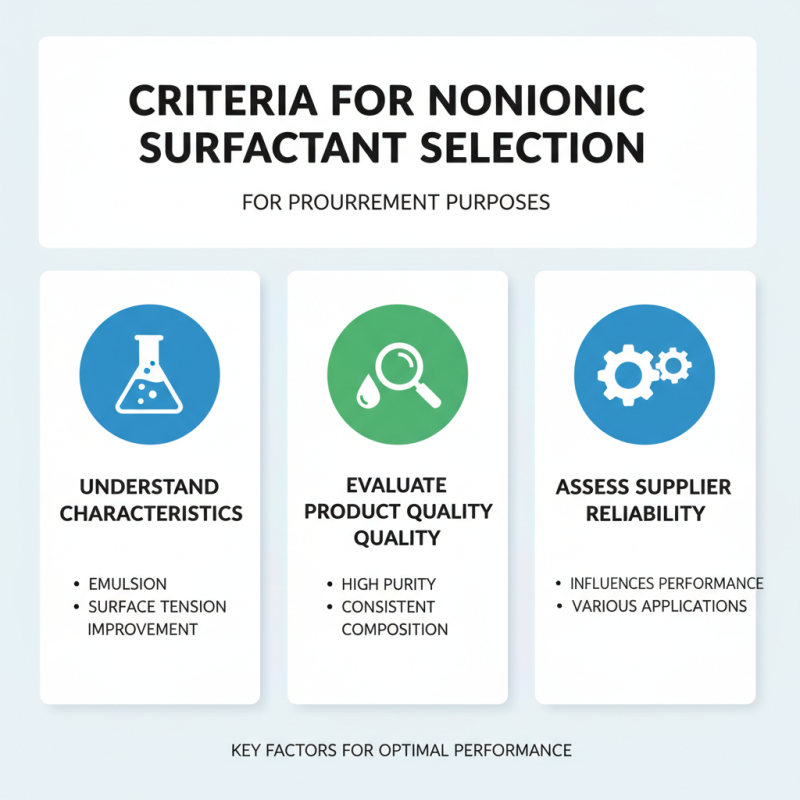
When selecting nonionic surfactants for procurement, understanding their characteristics is essential. Nonionic surfactants are valued for their ability to stabilize emulsions and improve surface tension. When choosing a supplier, consider the purity and consistency of their products. These aspects highly influence performance in various applications.

Tips: Always request samples before finalizing a large order. This provides insight into product quality and compatibility with your processes.

Another consideration is environmental impact. Choose nonionic surfactants that are biodegradable. This approach aligns with sustainability goals and regulatory requirements. Potential suppliers should provide data on the environmental effects of their products.

Tips: Engage in open communication with suppliers. Their expertise can guide you toward the most suitable options for your needs. Also, reflect on past experiences with surfactants. What worked? What didn’t? This knowledge can help refine your selection process.

Market Trends and Dynamics Affecting Nonionic Surfactant Supply Chain

Top 10 Nonionic Surfactants for Global Procurement Needs?

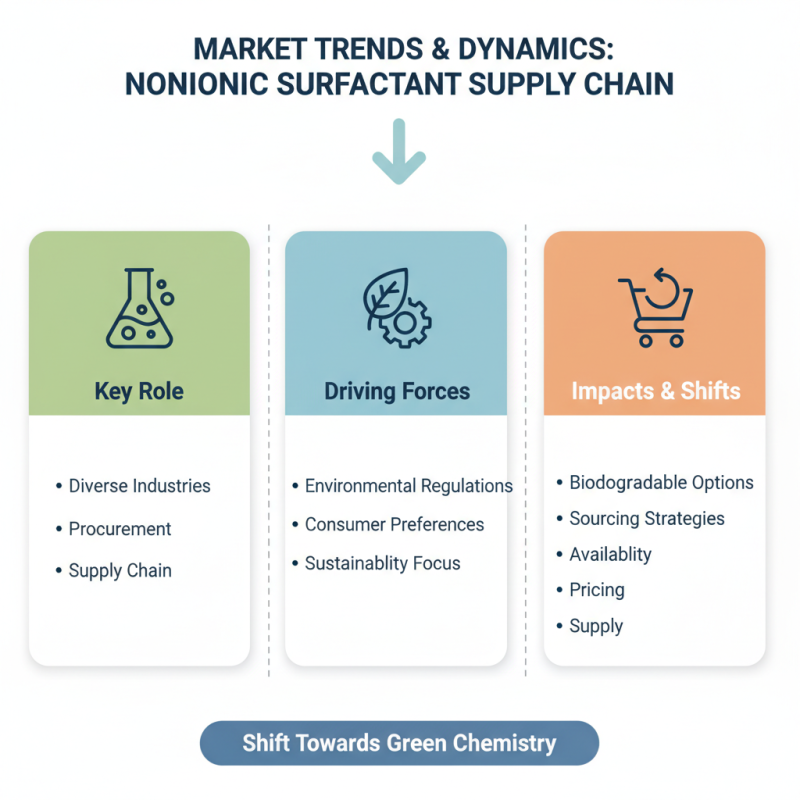
Nonionic surfactants play a crucial role in various industries, influencing procurement trends and supply chain dynamics. Factors like environmental regulations and consumer preferences drive changes in sourcing strategies. With sustainability in mind, companies are shifting towards biodegradable options. This impacts the availability of nonionic surfactants, affecting pricing and supply.

Frequent communication with suppliers is essential. Building relationships can lead to better insights into product availability and market trends. Keep an eye on regulatory shifts that might affect sourcing. Timely responses to these changes can help navigate potential disruptions.

Understanding local and global markets helps identify the best procurement strategies. The demand for eco-friendly products is rising, requiring suppliers to adapt. Evaluate potential partners based on their commitment to sustainability. Their ability to remain compliant with evolving regulations is critical for a reliable supply chain. Regularly reassess your sourcing options to stay competitive and aligned with market trends.