Top Polysorbate Emulsifiers for Food and Cosmetic Applications?
Polysorbate emulsifiers play a crucial role in both the food and cosmetic industries. These substances help to stabilize mixtures, ensuring a uniform blend of ingredients. By doing this, they enhance product quality and shelf-life. In food applications, polysorbates improve texture and mouthfeel. They are often found in sauces, dressings, and baked goods. In cosmetics, they contribute to the feel and application of creams and lotions.
While polysorbate emulsifiers provide many benefits, some concerns have emerged. The long-term effects of using these additives in products are still being studied. Consumers increasingly seek transparency about ingredients. This shift raises questions about the future use of polysorbate emulsifiers. Are they safe for daily use, or do they pose hidden risks?
Exploring the top polysorbate emulsifiers can reveal insights into their functionality. Different types serve unique purposes, each with its merits and drawbacks. Understanding these nuances is essential. It helps manufacturers create better formulations. The discussion around polysorbates invites reflection on ingredient safety and consumer demand. The balance between functionality and safety remains a topic worth exploring further.

Top Polysorbate Emulsifiers in Food: An Overview of Applications
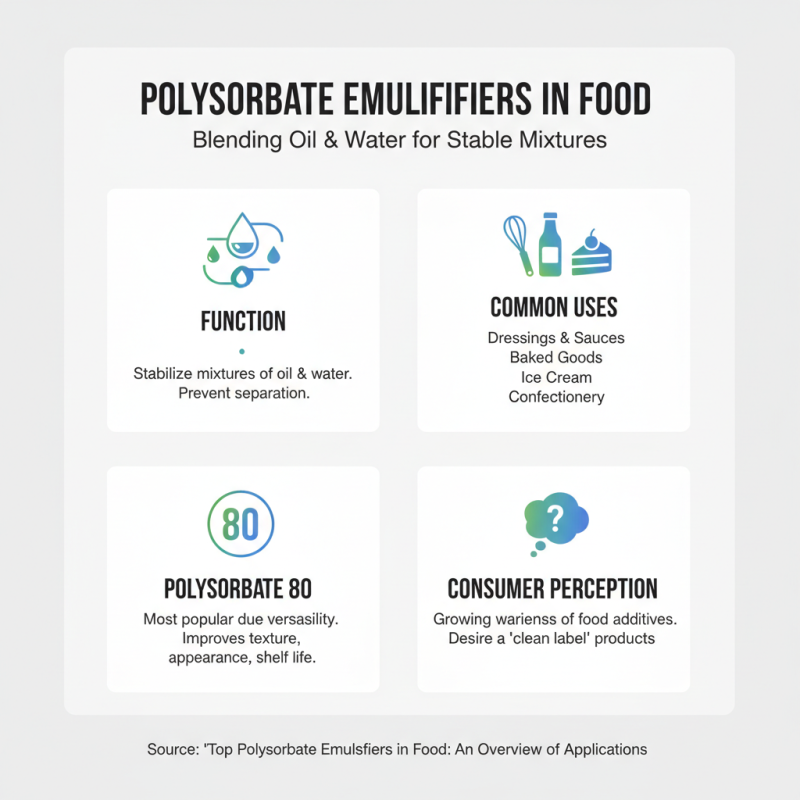
Polysorbate emulsifiers are widely used in food products. They help to blend oil and water, creating stable mixtures. This is crucial in dressings, sauces, and baked goods. Polysorbate 80 is particularly popular for its versatility. It can improve texture and appearance while extending shelf life. However, some consumers are wary of additives.
When using polysorbates in food, it’s important to consider labeling. Clear communication helps build trust with customers. Transparency around ingredients is essential.
Tip: Always test your emulsifier in small batches. This allows you to observe how it interacts with other ingredients. Sometimes, polysorbate may alter the flavor profile. Experimenting can lead to surprising results. Modify your ratios based on taste tests.
Another consideration is dietary preferences. Some people avoid certain emulsifiers for health reasons. It's beneficial to explore alternatives. Keeping a varied ingredient list can enhance creativity. It may be worthwhile to connect with customers. Listen to their feedback. This can guide your choices.
Key Properties of Polysorbate Emulsifiers in Cosmetic Formulations
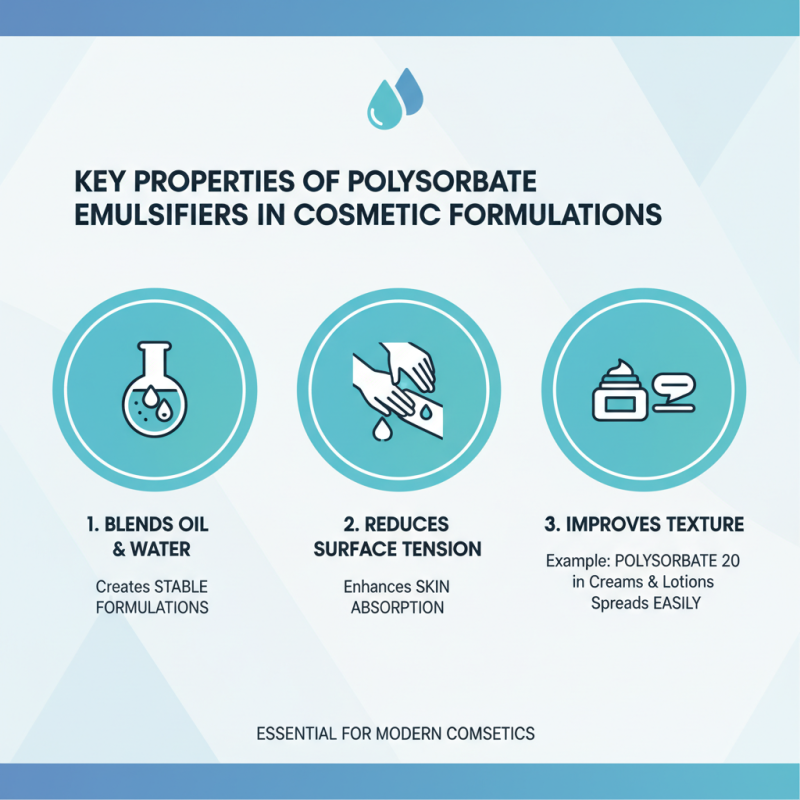
Polysorbate emulsifiers are widely used in cosmetics. They help blend oil and water, creating stable formulations. Their ability to reduce surface tension allows for better skin absorption. Polysorbate 20, for instance, is often found in creams and lotions. It enhances texture and spreads easily on the skin.
These emulsifiers also offer moisturizing benefits. They can trap water in formulations, providing hydration to the skin. However, not all polysorbates are created equal. Some might cause irritation for sensitive skin. It's essential to test formulations for compatibility. Consumers increasingly seek gentler options without compromising performance.
Furthermore, these emulsifiers can affect the shelf life of products. Proper use is crucial to maintain efficacy. While polysorbates are effective, their environmental impact raises concerns. More sustainable alternatives are emerging, but they require further study. The beauty industry must consider these factors.
Market Trends: Demand for Polysorbate Emulsifiers in Food and Cosmetics
The demand for polysorbate emulsifiers in food and cosmetics is on the rise. According to recent market reports, the global market for polysorbate is projected to grow significantly, with a CAGR of 4.5% through 2028. This growth stems from their ability to stabilize emulsions, enhancing the texture and shelf life of products. Consumers are increasingly looking for clean-label ingredients, which has pushed formulations to focus on polysorbate alternatives.
In food applications, polysorbates help improve the mixing of oil and water, crucial for sauces and dressings. They can also enhance the creaminess of ice creams. A 2021 survey indicated that 70% of formulators are prioritizing stability and performance. However, some consumers remain skeptical about synthetic emulsifiers. This discrepancy poses a challenge for manufacturers.
Tips: Always check the ingredient list. Transparency is key. Educating consumers about the benefits of polysorbates could shift their perceptions. Additionally, consider formulation tweaks to balance performance and natural claims, as the market trends continue to evolve.
Top Polysorbate Emulsifiers for Food and Cosmetic Applications
| Emulsifier Type |
Application |
Market Demand (2023) |
Growth Rate (%) |
| Polysorbate 20 |
Food |
High |
5.5 |
| Polysorbate 60 |
Cosmetics |
Medium |
4.2 |
| Polysorbate 80 |
Food & Cosmetics |
Very High |
6.0 |
| Polysorbate 40 |
Food |
Medium |
4.5 |
| Polysorbate 100 |
Cosmetics |
Low |
3.8 |
Health and Safety Regulations for Polysorbate Use in Consumer Products
Polysorbate emulsifiers are widely used in food and cosmetic products. However, their safety is a major concern among consumers. The FDA and EFSA have set specific limits for polysorbate in various applications. For instance, the maximum limit for polysorbate 80 in food is 0.5%. This ensures that consumers are not exposed to excessive amounts.
In cosmetics, safety assessments are crucial. The CIR Expert Panel reviewed polysorbates and deemed them safe at low concentrations. Yet, the studies revealed potential skin irritation at higher levels. This calls for careful formulation practices. Quality control is necessary to ensure compliance with safety standards.
Recent research indicates an increase in consumer awareness regarding ingredient safety. Many individuals now prefer products with clean labels. This trend pushes manufacturers to scrutinize their emulsifier choices. Industry data shows that natural alternatives are gaining traction. Consumers are seeking safer, more transparent options. This shift highlights the need for ongoing discussions about polysorbate usage in consumer products.
Top Polysorbate Emulsifiers for Food and Cosmetic Applications
This chart displays the application scale of various polysorbate emulsifiers used in food and cosmetic industries. Each emulsifier is rated on a scale of 0 to 100 based on its applications.
Comparative Analysis of Polysorbate Types and Their Functional Benefits
Polysorbates are versatile emulsifiers widely used in food and cosmetics. They help blend oil and water, improving texture and stability. Different types of polysorbates offer unique functional benefits.
For instance, Polysorbate 20 is great for light emulsions. It easily disperses in water and enhances the overall viscosity of a product.
Another variant, Polysorbate 80, is often favored for creamier formulations. It provides a richer mouthfeel in food and smoother application in cosmetics. However, using too much can lead to greasiness. Balancing the concentration is key to achieving the desired texture without compromising performance.
In comparison, Polysorbate 60 is less known but effective for bakery applications. It creates a softer crumb and extends shelf life. Yet, its impact can vary depending on the recipe. Not all forms may suit every application, leading to a trial-and-error process. Understanding these subtleties is crucial for formulators. Striving for perfection requires time and careful consideration.