Top 10 Uses of Ethyl P-Hydroxybenzoate in China?
In the realm of cosmetic and pharmaceutical formulations, Ethyl P-Hydroxybenzoate stands out as a key ingredient. Dr. Liu Wei, a renowned chemical engineer, emphasizes its importance: "Ethyl P-Hydroxybenzoate is not just a preservative; it's a complex chemical that enhances product stability." This statement highlights its dual function in maintaining the efficacy of various products.
Ethyl P-Hydroxybenzoate is widely used in China across multiple industries. Its role as a preservative helps extend shelf life. However, the conversation around its safety and effectiveness is ongoing. Some experts call for more research to fully understand its long-term effects. Despite its benefits, consumers must be cautious about over-exposure.
In cosmetics, Ethyl P-Hydroxybenzoate acts as a protector against microbial growth. It preserves not only lotions but also hair care products, making them safer for daily use. Yet, there are discussions about the need for alternative solutions. As the industry evolves, balancing safety and effectiveness remains a challenge. This ongoing dialogue is crucial for consumers and manufacturers alike.

Applications of Ethyl P-Hydroxybenzoate in the Cosmetic Industry
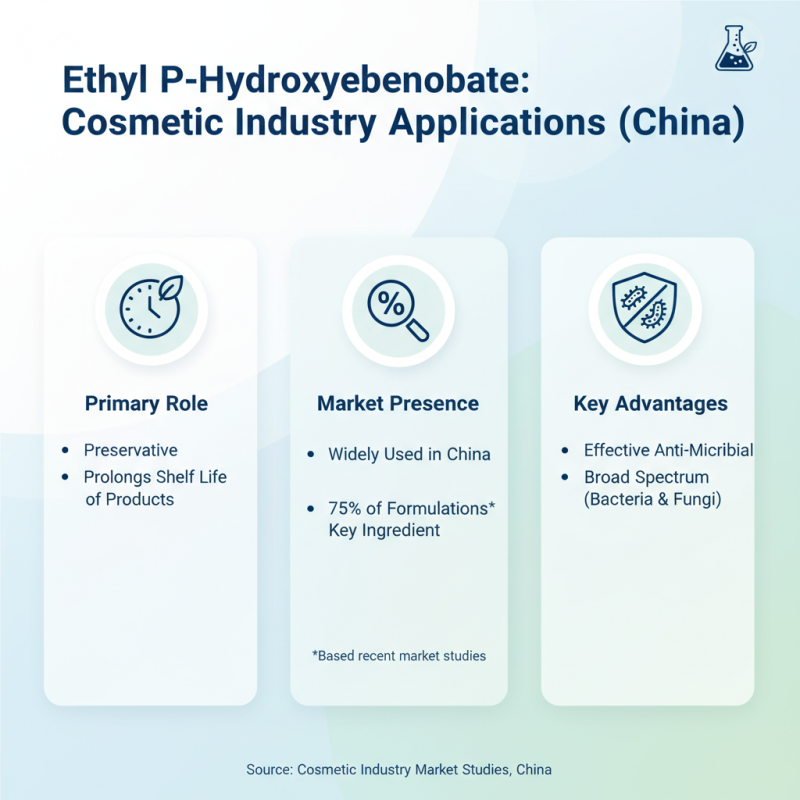
Ethyl P-Hydroxybenzoate, widely recognized as a preservative, plays a crucial role in the cosmetic industry in China. This compound is primarily used to prolong the shelf life of products. According to recent market studies, nearly 75% of cosmetic formulations contain some type of preservative. Ethyl P-Hydroxybenzoate stands out due to its effectiveness against a broad range of bacteria and fungi.
In skin care, this ingredient ensures that creams and lotions remain safe for use over time. Consumers tend to favor products with lower microbial contamination risks. A report from the Chinese Cosmetic Ingredients Association indicates that Ethyl P-Hydroxybenzoate is preferred for its mild nature compared to harsher preservatives. However, some consumers express concern about potential allergens. This raises questions about the balance between product effectiveness and safety.
Makeup products also benefit from this preservative. Ethyl P-Hydroxybenzoate helps maintain color stability and texture. Data suggests that about 60% of makeup users prioritize product longevity. Yet, feedback shows that transparency in ingredient usage is becoming increasingly important. Many consumers are seeking brands that prioritize safe and effective formulations. This trend may lead to a reevaluation of preservative choices in future cosmetic products.
Role of Ethyl P-Hydroxybenzoate as a Preservative in Food Products
Ethyl P-Hydroxybenzoate, commonly known as parabens, plays a significant role in food preservation. In China, its usage is widespread. This compound inhibits the growth of bacteria and fungi, ensuring food products remain safe for consumption. Its effectiveness lies in its ability to extend shelf life without compromising taste or quality.
Incorporating Ethyl P-Hydroxybenzoate in food products can be beneficial. However, it is essential to use it in appropriate amounts. Overuse may lead to potential health concerns, triggering discussions around its safety. Foods such as sauces, dressings, and ready-to-eat meals often contain this preservative. It helps maintain freshness and flavor, allowing consumers to enjoy their favorite items longer.
Tips: Always check labels when purchasing processed foods. Look for terms like “preservative” or “ethyl p-hydroxybenzoate.” Moderation is key when consuming preserved products. Many prefer alternatives, leading to a growing demand for natural preservatives. Understanding the role of these compounds can foster informed choices in your diet.
Utilization of Ethyl P-Hydroxybenzoate in Pharmaceutical Formulations
Ethyl p-hydroxybenzoate, commonly known as ethyl paraben, is widely utilized in pharmaceutical formulations. This compound serves primarily as a preservative, preventing microbial growth in various products. In China, the increase in pharmaceutical and cosmetic industries has boosted its demand significantly. According to a recent industry report, the market for paraben-based preservatives is projected to grow by 4.5% annually.
Pharmaceutical companies often incorporate ethyl p-hydroxybenzoate into creams, gels, and ointments due to its effectiveness at low concentrations. It maintains product integrity and extends shelf life. Yet, some studies indicate potential sensitivities in a small percentage of the population. Awareness is essential for both manufacturers and consumers.
Tips: Always conduct patch tests before applying products with parabens to your skin. Look for formulations that disclose preservative concentrations clearly. Keep an eye on emerging studies around safety to ensure informed choices in your daily health regimen. Knowledge about ingredients can lead to better health decisions.
Top 10 Uses of Ethyl P-Hydroxybenzoate in China
Ethyl P-Hydroxybenzoate in Personal Care Products: Benefits and Uses
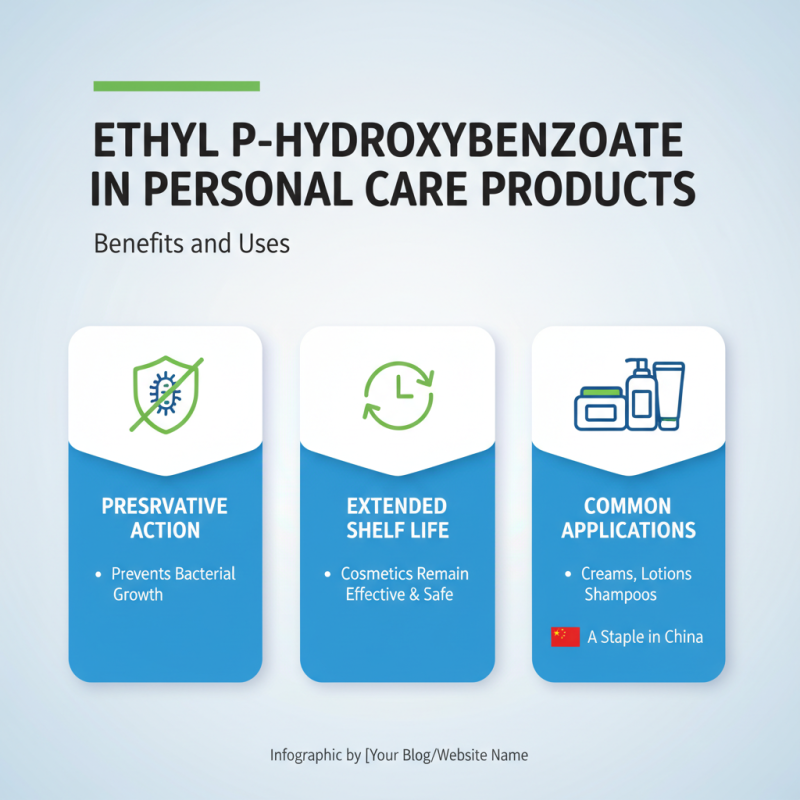
Ethyl P-Hydroxybenzoate, commonly known as a preservative, plays a vital role in personal care products. It prevents bacterial growth and extends the shelf life of cosmetics. This compound is often found in creams, lotions, and shampoos, ensuring that formulations remain effective and safe for users. Its effectiveness has made it a staple in many personal care applications in China.
When using products with Ethyl P-Hydroxybenzoate, understanding concentration levels is essential. High concentrations can cause skin irritation. Always check the ingredient list before applying new products. If you have sensitive skin, start with small amounts. Observe how your skin reacts over time.
Another point to consider is the formulation of personal care products. Not all products are made equally. Sometimes, accompanying ingredients can interact with Ethyl P-Hydroxybenzoate. This interaction may diminish or enhance its effectiveness. Reading reviews and seeking expert opinions can guide consumers in making informed choices.
Impact of Ethyl P-Hydroxybenzoate on Industrial Manufacturing Processes
Ethyl P-Hydroxybenzoate, commonly known as Paraben E, has a significant role in industrial manufacturing in China. This compound, primarily used as a preservative, also plays a vital role in enhancing the shelf-life of products. Reports indicate that its application in cosmetics and pharmaceuticals has surged, with a market growth rate reaching 8.5% annually. In coatings and plastics, Ethyl P-Hydroxybenzoate acts as an effective stabilizing agent, making it a crucial component in many formulations.
The impact of Ethyl P-Hydroxybenzoate on production processes is notable. In the polymer industry, for instance, its use can optimize the curing process, improving work efficiency. This efficiency results in reduced waste and lower energy consumption during manufacturing. However, concerns about its long-term safety might necessitate a reevaluation of its applications. Some studies suggest that while it effectively inhibits microbial growth, there’s a need for more research to gauge its impact on human health.
In the adhesive market, Ethyl P-Hydroxybenzoate contributes to product performance. It enhances adhesion and longevity in various substrates. Despite its advantages, manufacturers must weigh the benefits against potential consumer backlash and regulatory scrutiny. As industries evolve, the challenge will be to balance the efficiency provided by this substance with safety considerations. Enhanced monitoring and transparent reporting will be crucial for the future of its use in manufacturing processes.
Top 10 Uses of Ethyl P-Hydroxybenzoate in China
| Use |
Industry |
Impact on Processes |
Notes |
| Preservative in cosmetics |
Personal Care |
Enhances product shelf life |
Widely used in creams and lotions |
| Food preservative |
Food Industry |
Prevents microbial growth |
Safe for food contact |
| Antimicrobial agent |
Pharmaceuticals |
Increases product stability |
Used in ointments and gels |
| Additive in plastics |
Plastics Manufacturing |
Improves durability |
Enhances thermal stability |
| Ink formulation |
Printing Industry |
Enhances ink performance |
Used in both water-based and solvent-based inks |
| Textile treatment |
Textile Industry |
Protects fabrics from bacteria |
Improves fabric longevity |
| Wood preservation |
Construction |
Prevents mold and rot |
Used in treated wood products |
| Adhesives and sealants |
Manufacturing |
Improves bonding strength |
Used in various applications |
| Surface coatings |
Coatings Industry |
Reduces bacterial growth |
Improves surface hygiene |
| Electronics applications |
Electronics Manufacturing |
Enhances component longevity |
Used in insulating materials |