How to Use Xanthan Gum Soft for Perfect Texture in Your Recipes
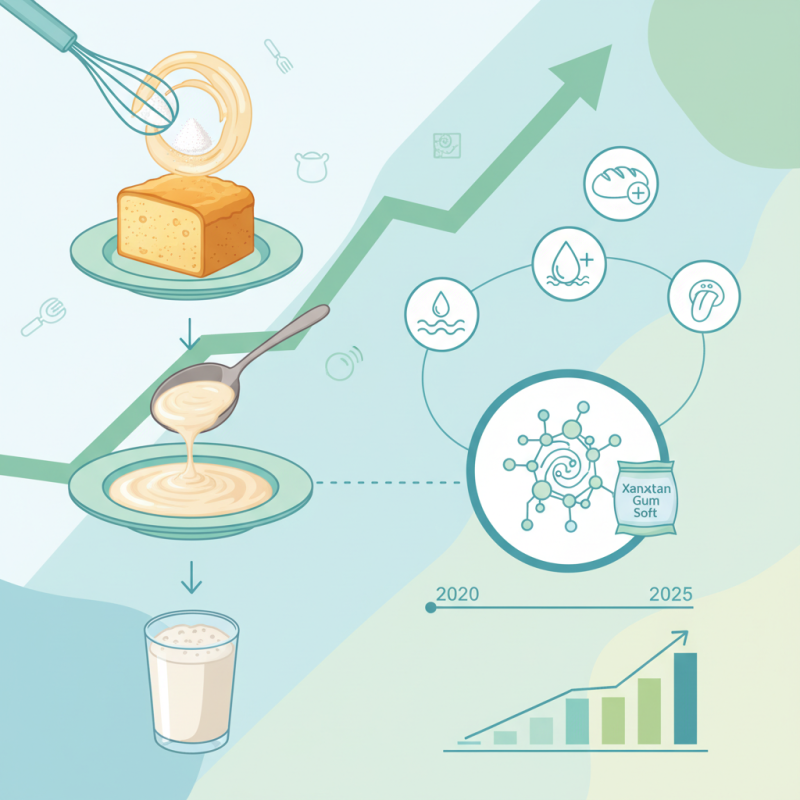
In the culinary world, texture plays a pivotal role in the overall experience of a dish, and achieving the perfect texture can be especially challenging. Among various texturizing agents, "Xanthan Gum Soft" has garnered significant attention for its versatility and effectiveness. A report from the Food and Agriculture Organization highlights that the global demand for food additives, including xanthan gum, has surged, with the market projected to reach $43.1 billion by 2025. This growth is largely driven by the increasing prevalence of gluten-free and plant-based diets, where xanthan gum serves as a crucial substitute for gluten, providing binding and thickening properties that enhance the mouthfeel of various dishes.
Research indicates that xanthan gum's unique ability to stabilize emulsions and prevent separation makes it an invaluable tool in both professional kitchens and home cooking. Understanding how to use Xanthan Gum Soft correctly can elevate the quality of baked goods, sauces, and even dairy alternatives. Studies show that precise incorporation can yield a smoother, more palatable texture, which is essential for consumer satisfaction. As culinary enthusiasts seek innovative ways to improve their recipes, mastering the use of Xanthan Gum Soft can be a game changer, providing a creative edge while ensuring consistency and quality in every bite.
Understanding Xanthan Gum: Properties and Uses in Cooking
Xanthan gum is a versatile food additive widely used in the culinary world, particularly for its thickening and stabilizing properties. Derived from the fermentation of carbohydrates by the bacteria Xanthomonas campestris, this polysaccharide has gained popularity due to its ability to create a desirable texture in various recipes. According to the International Food Additives Council, xanthan gum is recognized as a safe ingredient and plays a significant role in enhancing the mouthfeel and viscosity of food products. Its unique properties allow it to perform effectively in both cold and hot environments, making it a preferred choice among chefs and food manufacturers.
In a recent report published by the Global Food Ingredients Market, xanthan gum has been identified as a key ingredient in the formulation of gluten-free products, offering texture improvement that mimics traditional gluten-containing recipes. It is known to stabilize emulsions and prevents the separation of ingredients, such as oil and water, in dressings and sauces. Additionally, xanthan gum exhibits pseudoplasticity, meaning it becomes less viscous under shear stress. This characteristic is particularly beneficial in applications like smoothies and soups, where a creamy consistency is desired. By understanding the properties of xanthan gum and its multiple applications in cooking, culinary enthusiasts can experiment and elevate their recipes to achieve the perfect texture.
Usage of Xanthan Gum in Cooking
How to Choose the Right Type of Xanthan Gum for Your Recipe
When incorporating xanthan gum into your recipes, it's essential to choose the right type to achieve the perfect texture. Xanthan gum comes in various forms, including powdered and granular. For most culinary applications, the powdered form is preferred due to its ease of dispersion in liquids. When selecting xanthan gum for your recipe, consider the specific texture you are aiming for; a higher viscosity may be needed for sauces and dressings, while a lower viscosity is ideal for baked goods or smoothies.
Another crucial factor is the source and purity of xanthan gum. Different production methods can affect its thickening properties and can also influence its taste. Organic or non-GMO options may be preferable for those looking for clean-label ingredients. Additionally, pay attention to the recommended usage levels, as using too much xanthan gum can make your dish overly thick or gummy, detracting from the desired consistency. By understanding the different types and qualities of xanthan gum available, you can confidently select the right one to enhance your recipes.
Step-by-Step Guide to Incorporating Xanthan Gum Soft into Dishes
Incorporating xanthan gum soft into your recipes can elevate the texture and improve the overall experience of your dishes. To start, it’s essential to understand the properties of xanthan gum, which acts as a thickening and stabilizing agent. Begin by selecting the right amount for your recipe—typically, a small amount (about 1/8 to 1/4 teaspoon) is sufficient for thickening sauces or soups for a smoother consistency without altering the flavor.
As you mix xanthan gum into your ingredients, it’s best to do so gradually. Combine it with a dry ingredient or blend it with liquid to prevent clumping. For example, if you're preparing a salad dressing, whisk xanthan gum with the oil and vinegar before adding it to the other ingredients. This method ensures that the gum is evenly distributed, creating a creamy texture. For batters or doughs, sprinkle the xanthan gum on top and mix until fully incorporated, which will help achieve a uniform texture enhancing elasticity.
Finally, let your dish sit for a few minutes after adding xanthan gum. This resting period allows the gum to hydrate and thicken, resulting in a perfect texture. By following these steps, you can seamlessly integrate xanthan gum soft into your recipes, transforming your culinary creations into delightful, well-balanced dishes.
Adjusting Liquid Ratios When Using Xanthan Gum in Recipes
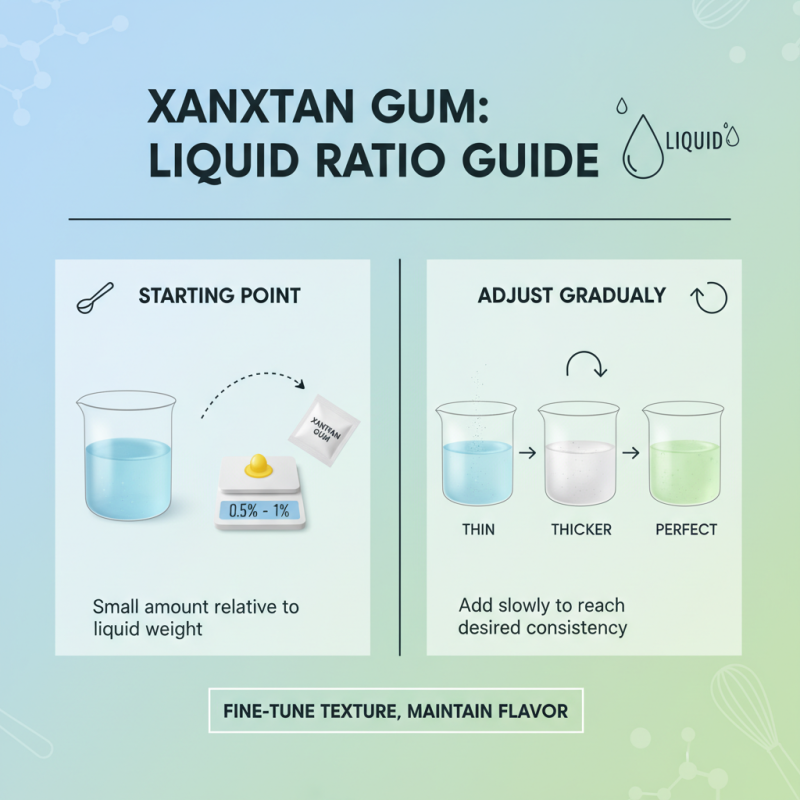
When incorporating xanthan gum into your recipes, understanding how to adjust liquid ratios is crucial for achieving the desired texture. Xanthan gum, a powerful thickening and stabilizing agent, can dramatically alter the viscosity of your mixtures. It's important to start with small amounts, typically around 0.5% to 1% of the total weight of the liquid, and gradually increase as needed. This approach allows you to fine-tune the consistency of your dish while maintaining the overall balance of flavors and liquid content.
**Tips:** Always mix xanthan gum with dry ingredients first or disperse it in a bit of oil before introducing it to liquids. This helps prevent clumping and ensures a smoother incorporation. If your recipe contains other thickeners, such as cornstarch or gelatin, remember to adjust their quantities as enzymatic reactions can occur, affecting the final texture.
Moreover, when using xanthan gum for specific applications like gluten-free baking or sauces, pay attention to how it interacts with other ingredients. Increasing the liquid might be necessary for batters or doughs to avoid a dry outcome. A good rule of thumb is to test and tweak the liquid amounts incrementally until you achieve the perfect texture. This experimentation will lead you to discover the unique properties of xanthan gum in your favorite recipes.
Common Mistakes to Avoid When Using Xanthan Gum for Texture
When incorporating xanthan gum into your recipes, it’s crucial to avoid common pitfalls that can lead to undesirable textures. One frequent mistake is using too much xanthan gum. Since this ingredient is a powerful thickening agent, even a small quantity can significantly alter the texture. Overusing it can result in a gel-like or overly slimy consistency that detracts from the intended mouthfeel. Always start with a minimal amount and gradually increase as needed, ensuring you achieve the desired texture without veering into undesirable territory.
Another common error is failing to properly disperse xanthan gum in liquids before incorporating it into your mixture. If xanthan gum is added directly to a liquid, it can clump together, forming unsightly lumps that are difficult to incorporate. To avoid this, blend the xanthan gum with a dry ingredient before mixing it into the liquid, or use an immersion blender for thorough dispersion. This technique will ensure a smoother, more consistent texture throughout your dish, allowing the xanthan gum to function effectively as a thickener or stabilizer without compromising the overall quality of your recipe.