Best Liquid Xanthan Gum for Your Global Sourcing Needs?
Liquid Xanthan Gum has gained significant attention in the food and beverage industry. According to a recent report by MarketsandMarkets, the global xanthan gum market is projected to reach USD 1.7 billion by 2025, reflecting robust growth in demand. This versatile ingredient serves as a thickener and stabilizer in various applications, making it crucial for today’s manufacturing processes.
However, not all Liquid Xanthan Gum products meet industry standards. It’s essential to source from reliable suppliers who prioritize quality and consistency. Products should be tested for viscosity and purity. Industry experts suggest that variations in sourcing can greatly affect product performance.
The complex nature of global supply chains adds another layer of consideration. Selecting the right liquid xanthan gum can impact not only product quality but also consumer satisfaction. Seeking out established suppliers with proven track records can make a significant difference. Continuous evaluation and adaptability are key to navigating this evolving market effectively.
Understanding Xanthan Gum and Its Applications in Various Industries
Xanthan gum is a fascinating polysaccharide widely used across various industries due to its thickening and stabilizing properties. It is produced by fermenting sugars using the bacteria Xanthomonas campestris. This fermentation process creates a unique gum that enhances the texture of many products. You can find xanthan gum in food, cosmetics, and pharmaceuticals.
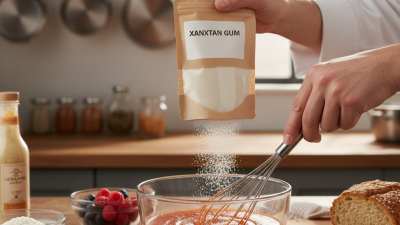
In food production, xanthan gum acts as a thickener and emulsifier. It helps improve the viscosity of sauces and dressings. In gluten-free baking, it mimics the elasticity needed for bread. For personal care products, xanthan gum stabilizes emulsions, ensuring consistent quality and performance.
Tip: Always test small quantities in recipes. Too much xanthan gum can lead to undesirable textures.
Industries also value xanthan gum for its low dosage requirement and effectiveness in enhancing product consistency. Its versatility is evident in products from salad dressings to lubricants. However, using xanthan gum can lead to textural issues if misapplied.
Tip: Keep an eye on the sourcing process. Not all xanthan gum is created equal. Quality matters for achieving the desired results in formulations.
Criteria for Selecting the Best Liquid Xanthan Gum for Sourcing
When selecting liquid xanthan gum for sourcing, specific criteria should guide your decision-making. Start by examining its viscosity. A thick liquid can enhance texture in food and cosmetic applications. However, the viscosity must match your product requirements. If too thick, it may affect the final product's consistency adversely.
Next, consider the source and production process. Liquid xanthan gum should be produced through reputable fermentation methods. This ensures purity and quality. Transparency in sourcing can build confidence in the supplier's reliability. Always request documentation regarding production processes and safety standards.
Finally, assessing solubility is vital. Liquid xanthan gum should dissolve easily in water. This affects not only functionality but also the efficiency of your production process. Test samples before committing to a large order. It's essential to reflect on these aspects to make informed decisions.
Top Manufacturers of Liquid Xanthan Gum Globally
When exploring liquid xanthan gum, understanding the top manufacturers is crucial for global sourcing needs.
As of recent data from market analysis reports, the global xanthan gum market is projected to reach USD 1.2 billion by 2026,
growing at a CAGR of 5.4% from 2021. This growth reflects the increasing demand for natural thickeners in various industries, especially food and beverage.
Leading manufacturers have established themselves through innovations in production techniques. They focus on sustainability and product purity.
Many utilize advanced fermentation processes. This has enhanced the quality of the gum while reducing environmental impact. However, challenges remain in ensuring
batch-to-batch consistency, which can affect product performance. Manufacturers must address these issues to meet sector demands and maintain competitive pricing.
Tip: When selecting a liquid xanthan gum supplier, assess their quality control measures. Look for certifications that ensure
their products meet international food safety standards. Additionally, consider suppliers who offer small batch testing. This can help you evaluate
the gum's performance in your specific applications before large-scale purchases.
Comparative Analysis of Liquid Xanthan Gum Products in the Market
Liquid xanthan gum has gained popularity in various industries, especially in food, cosmetics, and pharmaceuticals. A recent market analysis shows that the global xanthan gum market is expected to reach $1 billion by 2025, growing at a CAGR of 5.5%. This growth underscores the increasing demand for thickening agents driven by consumer preferences for clean-label products.
When comparing liquid xanthan gum products, it’s essential to consider their viscosity, solubility, and stability under different conditions. These factors influence their performance in end-user applications. A study published in the *Journal of Food Science* indicated that viscosity levels can vary significantly among different products, affecting their effectiveness in thickening solutions. For instance, some liquid xanthan gums exhibit superior thickening properties at lower concentrations. This insight can be instrumental for manufacturers looking to optimize formulations.
It’s worth noting that sourcing high-quality liquid xanthan gum can be challenging. Variability in product specifications can lead to inconsistencies in application outcomes. Prospective buyers should work closely with suppliers to ensure the quality and performance of the xanthan gum align with their product requirements. Regular testing and verification of properties are vital in maintaining product integrity across diverse applications.
Best Liquid Xanthan Gum for Your Global Sourcing Needs? - Comparative Analysis of Liquid Xanthan Gum Products in the Market
| Product Name |
Viscosity (cP) |
Concentration (%) |
pH Level |
Packaging (L) |
Price ($/L) |
| Product A |
1500 |
1.5 |
6.5 |
20 |
25.00 |
| Product B |
1200 |
2.0 |
7.0 |
25 |
22.50 |
| Product C |
1800 |
1.0 |
6.0 |
15 |
30.00 |
| Product D |
1600 |
2.5 |
6.8 |
10 |
28.00 |
Regulatory Considerations for Using Liquid Xanthan Gum in Sourcing
When sourcing liquid xanthan gum, understanding regulatory considerations is crucial. Many regions enforce strict guidelines regarding food and industrial additives. Compliance ensures safety and quality, reducing risks in sourcing processes. Familiarizing yourself with local laws helps avoid potential penalties and product recalls.
Different countries have unique regulations on xanthan gum. For instance, the European Union may impose different usage limits compared to North America. It is vital to verify certifications and approvals before sourcing. Documentation should be clear and accessible. Producers must also address allergen labeling requirements in their markets.
Sourcing experts highlight the importance of due diligence. Not all suppliers adhere to the same standards. Investigating the supplier's compliance history is wise. Challenges may arise with documentation discrepancies. Fostering transparent communication with suppliers is essential. This builds trust and encourages accountability in sourcing practices.