Why is Xanthan Gum Soft in High Demand for Global Suppliers?
Xanthan Gum Soft has become a key ingredient across various industries. Its unique properties make it highly sought after by global suppliers. Renowned food scientist Dr. Emily Carter states, "The versatility of Xanthan Gum Soft is unmatched, allowing it to enhance both texture and stability." This highlights its importance.
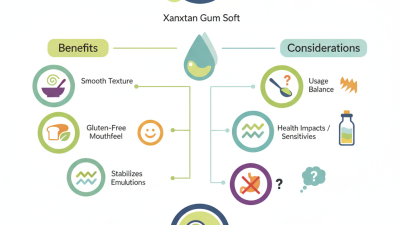
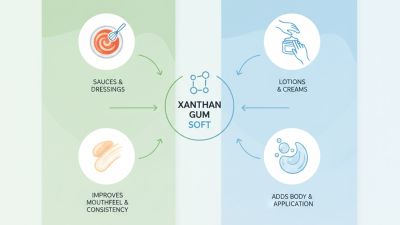
The rising demand stems from its use in gluten-free and low-fat foods. Xanthan Gum Soft improves the mouthfeel in products where fat reduction occurs. In cosmetics, it stabilizes emulsions and enhances product elasticity. These attributes are crucial in maintaining consumer satisfaction.
However, challenges exist. Supply chain issues can lead to fluctuations in availability. Additionally, not all substitutes can replicate the same effects. The future of Xanthan Gum Soft depends on innovation and addressing these barriers. As industries evolve, its role will likely expand, requiring careful consideration and adaptation from suppliers.

The Increasing Global Demand for Xanthan Gum in Food Industry Applications
Xanthan gum is increasingly important in the food industry. A biopolymer produced through fermentation, it serves as a thickening and stabilizing agent. Recent studies show that the global xanthan gum market is projected to reach over $1 billion by 2025, growing at a CAGR of around 5.5%. This growth is largely driven by the rising demand for gluten-free products, sauces, and dressings.
Food manufacturers appreciate xanthan gum for its ability to improve texture and viscosity. It is versatile, compatible with various other ingredients, and stable across a wide range of temperatures and pH levels. According to a report from MarketsandMarkets, the food application segment accounts for nearly 50% of global xanthan gum consumption. This trend highlights the increasing focus on enhancing food quality and consumer experience.
Despite its benefits, the industry faces challenges. Some consumers have concerns about the use of food additives. There is also the issue of sourcing. Xanthan gum is often derived from corn, which raises questions regarding sustainability and food security. As the food industry evolves, suppliers must address these concerns while meeting the growing demand. Balancing quality and ethics remains a challenge in this dynamic market.
Key Properties of Xanthan Gum Contributing to Its Popularity
Xanthan gum has gained immense popularity in various industries due to its unique properties. It acts as a thickening agent, stabilizer, and emulsifier. This versatility makes it suitable for food, cosmetics, and pharmaceuticals. Xanthan gum is produced through fermentation of sugar by the Xanthomonas campestris bacteria, resulting in a high molecular weight polysaccharide. Its ability to form a gel-like texture at low concentrations is particularly attractive to manufacturers seeking cost-effective solutions.
One key property of xanthan gum is its shear-thinning ability. This means it becomes less viscous under mechanical stress. This feature is crucial for products requiring easy handling and application. For instance, in sauces or dressings, it ensures a smooth pour while maintaining thickness. The ability to function in both high and low pH environments adds to its appeal across diverse applications.
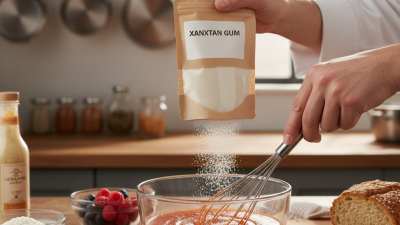
Tips: When incorporating xanthan gum, start with small amounts. Too much can lead to a gummy texture, which is undesirable. Mixing it thoroughly with dry ingredients can promote even distribution. Always perform a test batch to gauge the right proportion for your specific needs.
Why is Xanthan Gum Soft in High Demand for Global Suppliers? - Key Properties of Xanthan Gum Contributing to Its Popularity
| Property |
Description |
Applications |
Market Demand |
| Thickening Agent |
Provides viscosity in various formulations |
Food, Cosmetics, Pharmaceuticals |
High |
| Stabilizing Agent |
Prevents separation of components in products |
Sauces, Dressings, Beverages |
Increasing |
| Emulsifier |
Facilitates mixing of oil and water |
Creams, Lotions, Ice Cream |
Moderate |
| Mouthfeel Enhancer |
Improves texture and finish in product |
Beverages, Dairy Products, Sauces |
High |
| Thermal Stability |
Remains effective under a wide range of temperatures |
Bakery, Sauces, Condiments |
Growing |
Market Trends: Growth Projections for Xanthan Gum Suppliers by 2025
Xanthan gum is experiencing significant growth in demand, particularly among global suppliers. According to market research, the xanthan gum market is projected to reach over USD 1 billion by 2025, with an annual growth rate of around 5.8%. This steady increase is driven by its versatile applications in food, cosmetics, and pharmaceuticals.
The food industry is one of the largest consumers of xanthan gum. It provides texture and stability to various products. Data suggests that as consumers seek gluten-free and natural alternatives, the demand for xanthan gum will rise. Moreover, its role as a thickening agent in sauces and dressings continues to gain popularity.
Tips: Stay updated with industry trends. Knowledge of market shifts can provide a competitive edge.
Another area of growth is personal care products. Xanthan gum enhances the feel and spreadability of lotions and creams. However, suppliers should consider the sustainability of sourcing practices. The environment is a growing concern for consumers. A reflection on sustainable methods can yield long-term benefits.
Tips: Evaluate raw material sources. Ensure they align with eco-friendly practices.
By 2025, the trend towards clean label products may further amplify xanthan gum's market presence. Suppliers should adapt to these evolving preferences to remain relevant. Understanding consumer behavior is essential in navigating this dynamic landscape.
Xanthan Gum's Versatility in Non-Food Industries and Its Impact
Xanthan gum is gaining traction in various non-food industries. Its unique properties make it a flexible ingredient, useful in many applications. In cosmetics, Xanthan gum acts as a stabilizer and thickener, enhancing product textures. The global cosmetic industry is projected to reach $805 billion by 2023, fueling demand for innovative ingredients like Xanthan gum.
In the pharmaceutical sector, Xanthan gum serves as a binder and stabilizer in drug formulations. This versatility is critical, as pharmaceutical companies aim for higher product efficacy. A report by Grand View Research shows that the global pharmaceutical excipients market is projected to expand at a CAGR of 6.2% from 2021 to 2028. Companies are looking for reliable, effective materials to enhance formulations.
Despite the advantages, some challenges remain. Quality control can vary among suppliers, leading to inconsistencies. Not all batches meet the desired characteristics. Further, environmental concerns regarding large-scale production are significant. As industries diversify, finding sustainable sourcing solutions is crucial for long-term viability. The growing interest in products with natural origins puts pressure on suppliers to adapt their practices.
Xanthan Gum Demand in Non-Food Industries
This chart illustrates the usage of xanthan gum in various non-food industries, highlighting its significant demand due to its versatility in applications such as cosmetics, pharmaceuticals, oil and gas, agriculture, and textiles.
Regional Analysis: Major Markets Driving Xanthan Gum Supply Chains
Xanthan gum's demand is surging, with several regions leading the charge. North America is a major consumer. The food industry extensively uses xanthan gum for its thickening and stabilizing properties. This growing trend is reflected in product formulations across various sectors.
Asia-Pacific is also becoming a significant market. Countries like China and India are increasing production capacities. The rise in food processing industries contributes to this growth. Moreover, the cosmetic and pharmaceutical sectors are exploring xanthan gum as an essential ingredient. The versatility of xanthan gum attracts diverse applications, further boosting the market.
Europe plays a crucial role in xanthan gum supply chains. The demand for natural additives is on the rise. This shift towards clean-label products has led manufacturers to seek xanthan gum. However, challenges arise from fluctuating raw material availability. Suppliers need to adapt quickly to meet changing consumer preferences in this dynamic market.