How to Choose Food Additives for Global Sourcing?
Choosing food additives for global sourcing is a complex task. Food additives play a vital role in enhancing flavors, preserving freshness, and improving textures. However, not all additives are created equal. Understanding their quality and safety is essential.
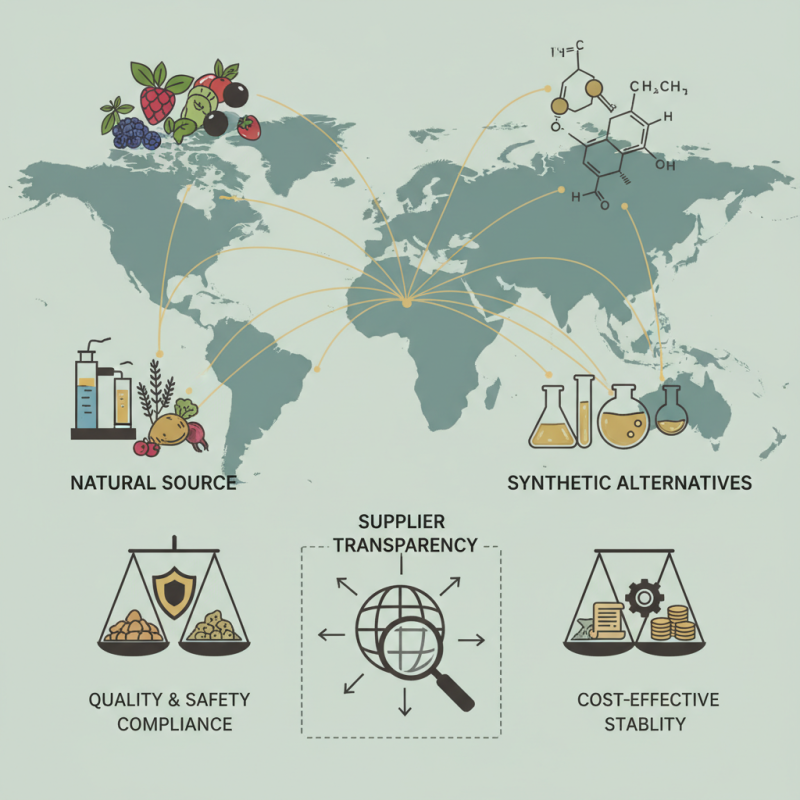
When sourcing food additives, consider their source. Are they natural or synthetic? Natural additives may appeal to consumers seeking healthier options. However, synthetic alternatives can often be more stable and cost-effective. It's crucial to evaluate the regulatory standards in various regions, as compliance ensures safety and quality.
Transparency is key in the additive selection process. Knowing where an additive comes from can help build trust with consumers. Engaging with reliable suppliers who prioritize quality can lead to better products. However, some suppliers may not provide complete information about their process or ingredients. Reflecting on these aspects can guide better decision-making in the sourcing of food additives.
Understanding Food Additives: Types and Functions
When discussing food additives, it's essential to understand their types and functions. Food additives serve various purposes, including preservation, flavor enhancement, and color improvement.
Preservatives prevent spoilage from bacteria and fungi. Antioxidants protect food from oxidation, preserving quality. Coloring agents make products visually appealing, influencing consumer choice.
Emulsifiers play a crucial role in maintaining texture. They ensure ingredients blend smoothly, improving consistency. Sweeteners provide alternatives to sugar, catering to health-conscious consumers. Each additive has its own function, but the choice must be informed. Not all additives are suitable for every product.
Working with a reliable source is vital. Checking regulations is necessary as rules vary by region. However, even compliant ingredients may elicit concerns among consumers. Transparency about sources and functions builds trust. As food producers, we ought to reflect on the choices we make. Are we prioritizing health, safety, or profit?
Identifying Quality Standards for Food Additives in Global Markets
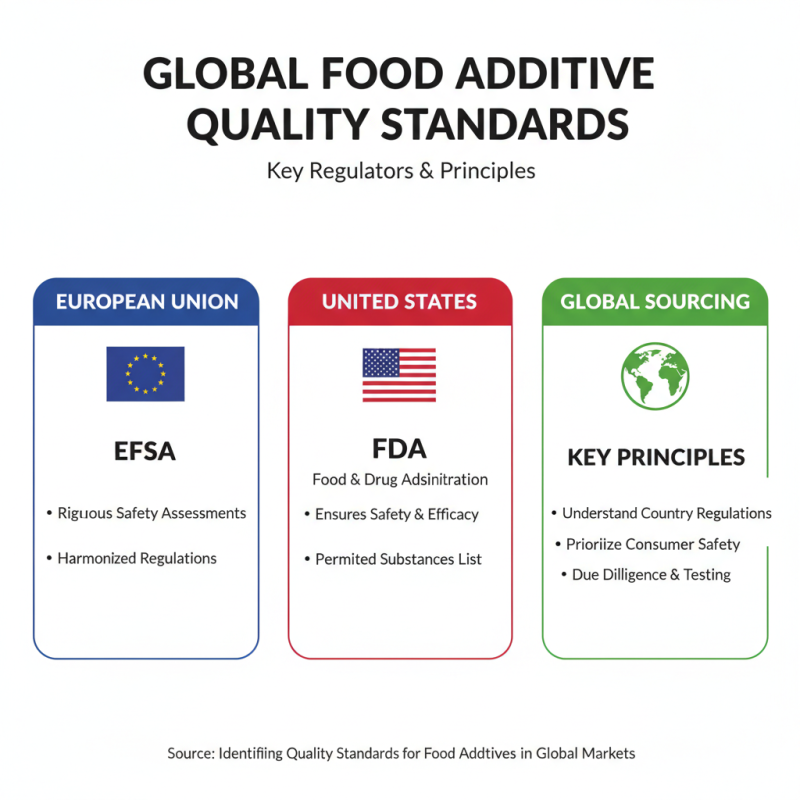
When selecting food additives for global sourcing, understanding quality standards is essential. Various countries have distinct regulations. For instance, in the EU, the European Food Safety Authority (EFSA) sets rigorous standards. In the US, the FDA oversees food additives, ensuring safety and efficacy.
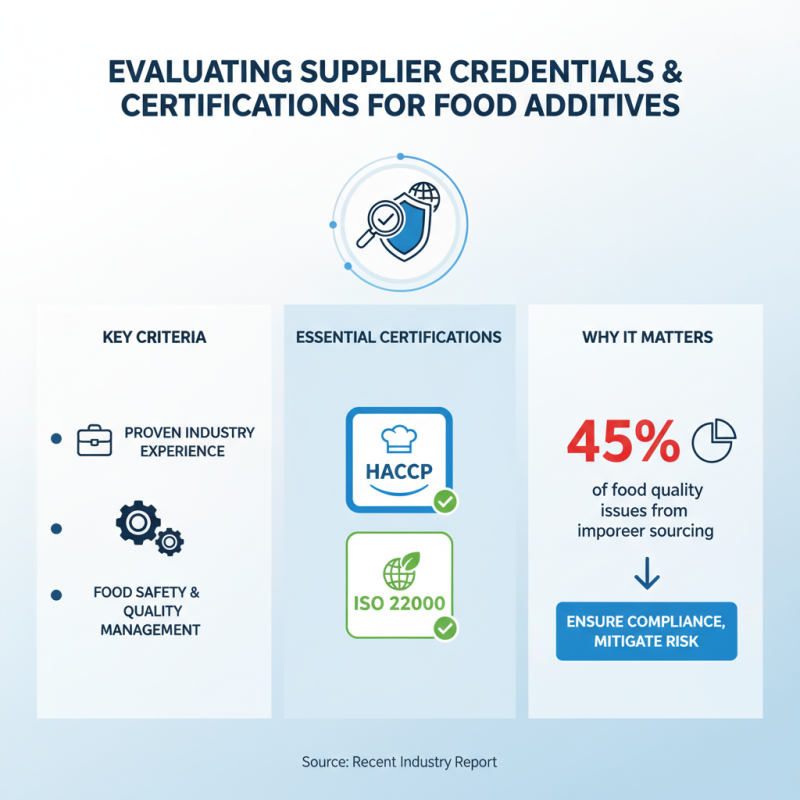
Studies show that approximately 65% of food companies prioritize quality certifications when sourcing. This emphasizes the need for reliable suppliers. Not all additives meet the standards of major markets. Identifying recognized certifications can help mitigate risks. For example, ISO 9001 certification indicates a commitment to quality management.
Furthermore, the presence of contaminants in food additives can pose health risks. Reports reveal that about 40% of suppliers fail to adequately test their products. This highlights the importance of due diligence. Supply chain transparency is critical. Companies should demand detailed documentation from suppliers. Such measures can build trust and ensure compliance with global quality standards.
Navigating Regulatory Compliance for Food Additives in Different Regions
Navigating regulatory compliance for food additives can be complex. Different regions have unique standards and guidelines. For instance, Europe has stringent regulations under the EFSA. In contrast, the FDA in the United States follows a different approach. Understanding these frameworks is crucial when sourcing food additives globally.
Documentation is essential. Ensure that ingredient specifications meet regional requirements. Some regions may require pre-market approval, while others may not. It’s common for companies to overlook minor details in food labels. This oversight can lead to compliance issues. Research local regulations thoroughly to avoid such pitfalls.
Consulting with regulatory experts can provide valuable insights. They can clarify the nuances of compliance. However, reliance on experts can sometimes lead to discrepancies in interpretation. Regularly review and update compliance strategies. This helps maintain accuracy as regulations evolve over time.
Assessing Cost-Effectiveness of Food Additives in Sourcing Decisions
When considering food additives for global sourcing, cost-effectiveness plays a crucial role. Many companies often overlook the long-term benefits of certain additives. Cheaper options may seem appealing initially, but they could lead to quality issues later. A thorough analysis of each additive’s impact on flavor, texture, and shelf-life is essential. This holistic approach may save costs down the line.
Tips: Evaluate the overall quality of additives. Look for those with a proven track record in enhancing product integrity. Short-term savings can become long-term expenses. Conducting trials helps reveal the additive's real-world performance. Gather customer feedback on your product’s quality to reinforce your sourcing decisions.
Keep in mind that regulatory compliance is non-negotiable. Verify the safety and legality of each additive in your target markets. An additive that is permissible in one region may be banned elsewhere. Staying informed about changing regulations requires agility in sourcing decisions. Striking a balance between cost and compliance remains a challenge for sourcing teams. Think critically about additives that align with your company’s values and customer preferences.
How to Choose Food Additives for Global Sourcing? - Assessing Cost-Effectiveness of Food Additives in Sourcing Decisions
| Additive Type |
Function |
Cost per Kg ($) |
Effectiveness Rating (1-5) |
Regulatory Status |
| Preservatives |
Extend shelf life |
15.00 |
4 |
Approved |
| Emulsifiers |
Stabilize mixtures |
10.50 |
5 |
Approved |
| Coloring Agents |
Enhance appearance |
20.00 |
3 |
Restricted |
| Thickeners |
Improve texture |
5.00 |
4 |
Approved |
| Flavor Enhancers |
Boost taste |
30.00 |
4 |
Approved |