Sodium Erythorbate is a widely used antioxidant in processed foods, especially cured meats, seafood, and packaged products. Global buyers need more than a low quoted price. They need consistent purity, dependable documentation, and shipments that arrive in usable condition.
This guide introduces leading Sodium Erythorbate suppliers serving international markets. It focuses on practical buying signals, including food-grade specifications, certificate of analysis procedures, traceability records, and batch consistency. Packaging also matters. Moisture-resistant bags can protect the powder during long ocean transport. Clear labeling reduces receiving errors at busy warehouses.
Experienced procurement teams usually ask about production capacity, minimum order quantities, lead times, and export experience. They may also review quality certifications, technical data sheets, and independent test reports. A supplier’s response speed can reveal its operational discipline. Still, fast communication is not proof of quality.
Supplier rankings can become outdated. Company capabilities may change with raw material costs, audits, or logistics disruptions. Buyers should verify current documents before signing contracts. That step is easy to overlook. It should not be.
The strongest suppliers combine technical competence with transparent communication. They explain specifications without hiding behind vague claims. They also provide realistic delivery estimates and clear support after shipment. This overview offers a structured starting point, not a substitute for due diligence. Each buyer should match supplier capabilities with its product formulation, destination requirements, and risk tolerance.
Sodium erythorbate, or E316, is the sodium salt of erythorbic acid. Its CAS number is 6381-77-7. It works as a reducing antioxidant, slowing oxidation in processed foods. In cured meat, it helps preserve pink color and limits rancid notes. It can also improve the consistency of seafood and prepared products.
The FAO/WHO JECFA database lists sodium erythorbate under erythorbates, with an acceptable daily intake described as “not specified” when used under good manufacturing practice. Codex Alimentarius identifies it as INS 316 and permits its use in selected food categories. These references matter, but national rules still differ. A global buyer should verify the destination market, not rely on one certificate.
Commercial users usually request food-grade material with defined assay, moisture, heavy-metal limits, and microbiological controls. A recent technical review in Food Additives & Contaminants highlights oxidation control as a major quality concern in processed-food supply chains. That sounds straightforward. It is not always.
Supplier evaluation should include batch traceability, stability data, packaging performance, and a current certificate of analysis. Light, humidity, and poor sealing can affect powder handling and test results. Some market reports forecast steady growth for antioxidant ingredients, driven by convenience foods and longer distribution routes. Forecasts are useful, but they are not guarantees. Buyers should compare real batch records, regulatory documents, and delivery performance before selecting a sodium erythorbate source.

Global buyers often treat “≥99% assay” as a simple purchasing number. It is not. Sodium erythorbate, identified as INS 316 in the Codex General Standard for Food Additives, requires a defined test method and basis of calculation. The FAO/WHO JECFA Compendium and Food Chemicals Codex monographs provide reference points for identity, purity, and contaminant control. Serious suppliers should state whether the assay is measured on an as-is or dried basis. That detail can change the commercial result.
Testing needs evidence. A reliable supplier normally provides a batch-specific certificate of analysis, production date, lot number, and retest period. Assay testing may use validated titration or chromatographic methods, supported by method verification. ISO/IEC 17025 laboratory accreditation strengthens confidence, but accreditation alone does not guarantee every batch meets ≥99%. Check the actual report. Ask for moisture, heavy metals, residual solvents, and microbiological results when required by the buyer’s specification. Codex and JECFA references should match the intended food application and destination market.
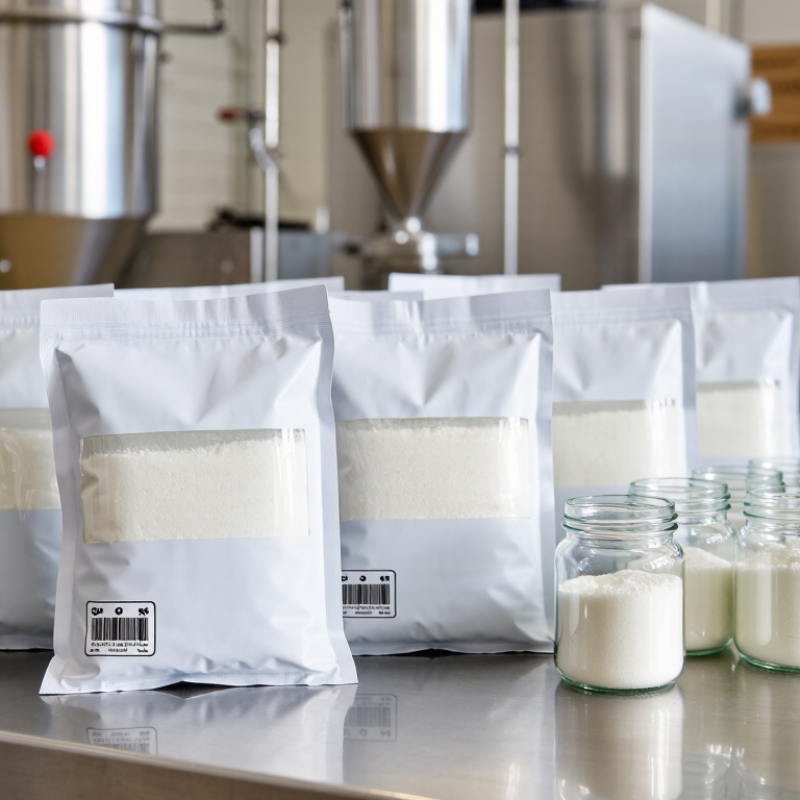
Packaging also reveals practical experience. Moisture-barrier bags, sealed inner liners, and controlled warehouse conditions help protect the fine white powder during transport. Some suppliers describe purity without explaining sampling frequency. That gap deserves attention. A single passing test is not a quality system. Buyers should compare three consecutive lots, review deviations, and confirm traceability from raw materials to shipment. Mistakes happen, even in established factories. Good documentation makes them visible early.
Global buyers commonly set a stricter food-grade purchasing target of at least 99% assay. The JECFA specification for sodium erythorbate lists an assay range of 98.0% to 100.5%. Suppliers can demonstrate compliance with the ≥99% buyer threshold through batch-level identity, purity, and certificate-of-analysis testing.
Reference: FAO/WHO Joint Expert Committee on Food Additives specifications for sodium erythorbate.
Top Sodium Erythorbate Suppliers for Global Buyers
A reliable COA should match the exact sodium erythorbate lot being shipped. Check the lot number, production date, and testing date first. Purity is often listed as 98.0% minimum, but buyers should confirm the test method. Ask whether results use dry basis or as-is basis. This small detail can change purchasing decisions.
Moisture affects storage stability and handling. A high result may signal poor packaging or humid warehouse conditions. Review the stated limit and compare it with the actual value. pH should include the test concentration, temperature, and solvent. Without these details, the number is difficult to interpret. Heavy-metal limits need clear units, usually mg/kg or ppm. Check lead, arsenic, mercury, and cadmium separately. Total heavy metals alone may hide an important risk.
Tips: Request a recent COA and an independent laboratory report for one shipment. Confirm the analytical methods, equipment, and laboratory accreditation. Inspect the packaging for intact seals, dry inner liners, and readable labels. Do not accept copied COAs with missing signatures. I have seen documents that looked complete but used inconsistent lot numbers. That mistake is easy to miss. Keep a comparison sheet for purity, moisture, pH, and each heavy-metal limit. Supplier responsiveness also matters, although it should never replace laboratory evidence.
Reliable sourcing begins with the supplier’s region and manufacturing environment. China remains a major production base, supported by chemical processing experience, large export ports, and flexible packaging options. India also serves international buyers, especially those seeking established food additive manufacturing networks. European producers may offer strong documentation and close regulatory alignment, but their prices can be higher. Region alone is not enough.
Certifications require careful checking. Look for ISO 22000, FSSC 22000, HACCP, GMP, and valid Halal or Kosher documents when required. Each certificate should match the actual factory and product scope. A recent certificate of analysis should show assay, moisture, heavy metals, and microbiological results. Traceability matters. Ask for batch records and retention samples before signing a long-term contract.
Production capacity should be verified, not copied from a website. Request monthly output, available inventory, packaging details, and peak-season lead times. Export reach is clearer through shipping records, destination experience, customs documents, and port options. Suppliers serving multiple regions may manage documentation better, yet this is not guaranteed. I would also test a small shipment first. It may reveal labeling errors, slow replies, or unstable granule quality. One weakness remains: public capacity figures are often difficult to audit, so buyers should compare evidence rather than promises.
Global buyers evaluating sodium erythorbate suppliers usually begin with MOQ, not price alone. A low MOQ can support product trials, but it may raise the unit cost. Larger orders often improve pricing, yet they increase inventory risk and storage pressure. Experienced buyers compare both scenarios with a landed-cost worksheet. Small details matter.
For many food and ingredient shipments, 25 kg bags are a practical reference point. Buyers should confirm bag material, inner lining, pallet arrangement, labeling, and moisture protection. A clear specification sheet should match the certificate of analysis for each batch. Ask for evidence. Suppliers should also explain sampling procedures, production capacity, and quality-control checks. A factory audit or recent third-party inspection can strengthen confidence, although documents alone are never perfect.
Lead time needs careful definition. Does it begin after deposit, purchase-order confirmation, or artwork approval? Standard production may take several weeks, while custom packing can add delays. Seasonal demand and port congestion can change the schedule. Under Incoterms, buyers should clarify who handles freight, insurance, export clearance, and destination charges. Comparing FOB, CIF, and DDP quotes without matching these responsibilities can produce a misleading price. I have seen promising offers fail because the delivery window was assumed rather than written. A reliable agreement records the shipment date, packaging format, tolerance, payment terms, and remedy for delays. Perfect forecasts are unrealistic. Careful questions are not.
| Anonymous Supplier Profile | Primary Supply Region | Product Grade | Typical MOQ | 25 kg Packaging Option | Typical Lead Time | Common Incoterms | Export Documentation | Buyer Fit | Evaluation Level |
|---|---|---|---|---|---|---|---|---|---|
| Profile A | East Asia | Food grade, E316; powder or granular form | 500 kg–1 metric ton | 25 kg multi-wall paper bags with food-grade inner liner; palletized for export | 7–15 days after order confirmation; additional time may apply for production scheduling | FOB main seaport, CIF, CFR, and FCA | Commercial invoice, packing list, certificate of analysis, certificate of origin, and shipping documents | Importers seeking competitive pricing and full-container or consolidated shipments | High |
| Profile B | South Asia | Food grade, E316; commonly supplied for processed-food applications | 1–2 metric tons | 25 kg kraft paper bags or woven bags with an approved inner liner, subject to buyer specification | 10–21 days; port congestion and peak-season demand can extend transit planning | FOB, CIF, CFR, and EXW | Certificate of analysis, packing list, invoice, certificate of origin, and allergen or non-GMO statement when applicable | Cost-focused buyers with established import procedures and regular demand | High |
| Profile C | Southeast Asia | Food grade, E316; standard commercial specification | 500 kg–1 metric ton | 25 kg paper sacks with polyethylene inner bags; pallet and container loading available | 14–28 days, depending on production slot and export booking | FOB, CIF, CFR, and FCA | Commercial invoice, packing list, certificate of analysis, certificate of origin, and bill of lading | Buyers balancing regional sourcing, flexible shipment sizes, and moderate lead times | Medium |
| Profile D | Europe | Food grade, E316; documentation-oriented supply program | 1 metric ton or one pallet | 25 kg bags, usually supplied on heat-treated pallets with batch identification and traceability labels | 5–15 business days from available stock; made-to-order supply may take longer | FCA, DAP, CPT, and CIF where offered | Certificate of analysis, traceability records, safety data sheet, food-contact or compliance documents when applicable, and origin documents | Buyers prioritizing documentation, traceability, and delivery to regional warehouses | High |
| Profile E | North America | Food grade, E316; distribution-stock model | One pallet, commonly 36–40 bags of 25 kg, subject to warehouse policy | 25 kg bags with lot number, net weight, manufacturing information, and pallet wrapping | 3–10 business days from domestic stock; imported replenishment may require several weeks | EXW, FCA, DAP, and CPT | Certificate of analysis, invoice, packing list, safety data sheet, and domestic or import compliance records | Buyers needing shorter replenishment cycles and smaller repeat orders | High |
| Profile F | Middle East and North Africa | Food grade, E316; bulk import supply | 1–5 metric tons | 25 kg bags generally available for container shipments; pallet configuration should be confirmed before booking | 14–30 days after order confirmation, excluding ocean transit | FOB, CFR, CIF, and FCA | Certificate of analysis, certificate of origin, packing list, invoice, bill of lading, and legalized documents where required | Regional distributors and buyers consolidating multiple food-additive products | Medium |
| Profile G | Latin America | Food grade, E316; standard import specification | 1 metric ton or one pallet | 25 kg multi-wall bags with moisture-protective liner; labeling requirements should be agreed in advance | 14–30 days before dispatch, plus ocean transit and customs clearance | FOB, CFR, CIF, and DAP by quotation | Certificate of analysis, origin certificate, commercial invoice, packing list, and customs-supporting documents | Buyers that require landed-cost comparisons and destination-specific labeling support | Medium |
| Profile H | Global Trading Stock | Food grade, E316; source and batch vary by available inventory | 100–500 kg when stock is available | 25 kg original manufacturer bags or repacked bags, depending on inventory and local regulations | 2–10 business days for available stock; replenishment timing varies by origin | EXW, FCA, DAP, and courier or air-freight arrangements for urgent orders | Certificate of analysis and commercial documents; original traceability and repacking records should be requested | Trial orders, urgent replenishment, and buyers testing a new formulation before annual contracting | Standard |