Leave Your Message

How to Buy Xanthan Gum in Bulk?

Buying Xanthan Gum Bulk can lower unit costs and reduce repeat orders, but a large purchase deserves more than a quick price comparison. Xanthan gum behaves differently across sauces, dressings, baked goods, and beverage mixes. The right grade and particle size depend on the product, mixing equipment, and texture you want. A powder that blends smoothly in one process may form lumps in another. Small trials matter.

Start by defining your requirements. Check whether the product is intended for your application, and request a current specification sheet and certificate of analysis. Confirm the ingredient’s origin, manufacturing details, allergen information, and applicable food-quality documentation with the supplier. Ask about bag sizes, pallet quantities, lead times, and shipping conditions. A 25-kilogram bag may seem practical until storage space or handling becomes a problem. Keep the packaging sealed and follow the supplier’s storage guidance.

Compare the total delivered cost, not just the quoted price per kilogram. Also review sample availability, customer support, and how the supplier handles quality questions. Clear answers are a good sign. Vague promises are not. If a sample performs well, test it in your own recipe before committing to a large order; laboratory specifications cannot predict every production challenge. I would not treat the cheapest offer as automatically best. Bulk buying can save money, but only when quality, shelf life, and demand align. That balance is easy to underestimate. A cautious first order may be less efficient on paper, yet more sensible in practice.
How to Buy Xanthan Gum in Bulk?

Identify the Intended Use and Required Xanthan Gum Grade

Before ordering bulk xanthan gum, define the job it must perform. A sauce may need cling and suspension; a gluten-free dough may need elasticity and moisture retention. Cosmetic or industrial mixtures can require different viscosity, particle size, and impurity limits. “Food grade” alone is not a complete specification. Check the intended application, local requirements, and the supplier’s certificate of analysis for viscosity, moisture, microbial limits, and heavy metals. One detail is easy to miss: salt, acidity, and mixing temperature can change performance. Test a small sample in your actual formula.

Grade names are not always standardized between suppliers. Ask for measurable specifications, such as viscosity at a stated concentration, temperature, and test method, rather than relying on “high viscosity.” For food use, EFSA’s 2017 re-evaluation of xanthan gum (E 415) found no need to establish a numerical acceptable daily intake. That safety conclusion does not confirm that a particular batch suits your process. Request batch-specific documentation and verify it against your product requirements.

Small trials matter. Record mixing time, hydration, and the finished texture before committing to a bulk order; even a suitable grade can disappoint when the recipe changes.


Estimate Bulk Quantity and Define Product Specifications

Estimate bulk demand from real production, not a guessed annual figure. Multiply the batch size by xanthan gum dosage and planned batches, then account for normal process losses. Keep a modest buffer for delays, but base it on supplier lead time and your own usage history. Start with the recipe. A spreadsheet can still miss seasonal changes or a slow production month.

Before requesting a quote, define the product specifications that affect performance. State the intended application, target viscosity, dosage range, mesh size, and any moisture or microbiological limits your process requires. Agree on test methods and acceptable tolerances; two viscosity results are hard to compare if laboratories use different concentrations or mixing conditions. Ask for a current specification sheet and a representative sample. Small trials matter.

Test the gum in your actual formula, using the same water, mixing equipment, and hydration time used in production. Check for clumps, texture, and viscosity after the product has rested, not only immediately after mixing. Treat the first quantity estimate as provisional. Hydration behavior may change with the recipe, and that can affect both usage and ordering needs. Confirm packaging size, lot traceability, and storage guidance before setting the purchase quantity. Keep opened material dry and sealed.

How to Buy Xanthan Gum in Bulk? Estimate Bulk Quantity and Define Product Specifications

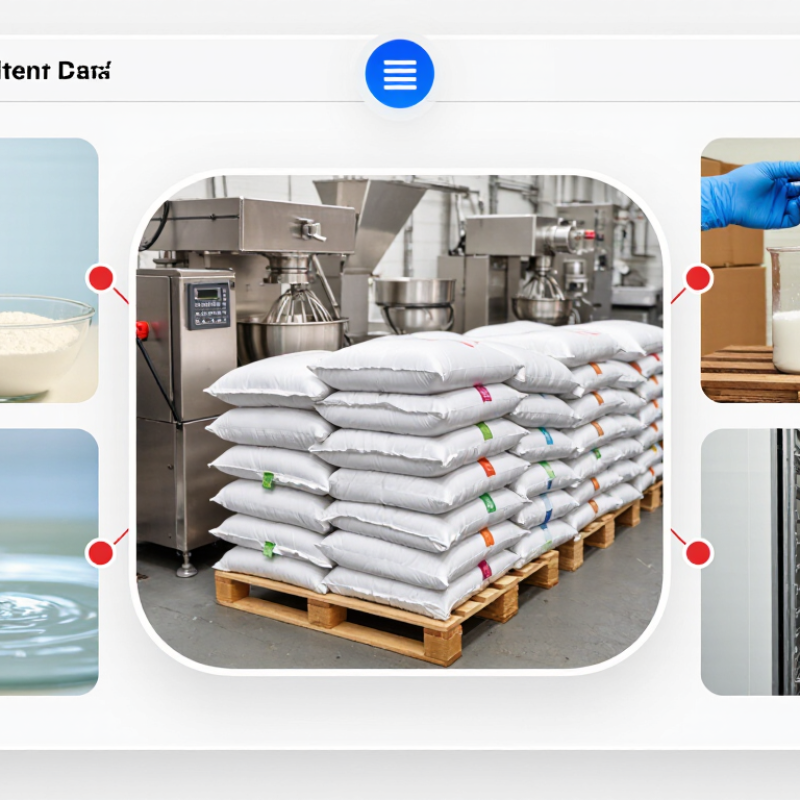
These examples convert common order sizes into 25 kg bag equivalents: 125 kg is 5 bags, 500 kg is 20 bags, and 1,000 kg is 40 bags. Estimate your order from expected usage and lead time, then confirm available packaging with the supplier. Before purchasing, specify the grade, intended application, mesh size, viscosity test method and target, and applicable food or industry requirements.

Compare Suppliers and Verify Quality Documentation

When buying xanthan gum in bulk, compare suppliers on more than price per kilogram. Check the minimum order, lead time, packaging size, and storage conditions. A low quote may not include freight or protective inner liners. Ask whether the material is food grade and suited to your intended use. Then request a sample before committing to a large shipment. Small tests can reveal differences in hydration, texture, or viscosity.

Paperwork matters. Request a current specification sheet and a certificate of analysis for the exact lot being offered. Check that the lot number matches the packaging and that test results cover relevant properties, such as viscosity, moisture, and microbiological limits. Ask for allergen statements, origin details, and traceability information when your quality program requires them. Verify that documents are dated and issued by the supplier or testing laboratory, rather than copied from an unrelated shipment. Keep the records with your receiving logs.

Be cautious with vague answers. A polished certificate is not proof by itself. I would confirm unusual results directly, though that extra step can slow purchasing. It is easy to overlook this when production is waiting. Compare suppliers using the same checklist, and record any gaps before approving a bulk order.

Assess Pricing, Packaging, Shipping, and Storage Requirements

When buying xanthan gum in bulk, compare the delivered cost per kilogram, not just the quoted product price. Include minimum order quantities, pallet charges, and any fees for smaller shipments. Ask for a current specification sheet and lot documentation, then check that the stated grade and viscosity suit your process. A low price is less useful if the material performs differently between batches.

Packaging affects handling and waste. Common options include lined bags and larger bulk sacks; choose a size your team can lift and use before opening another. Confirm that inner liners protect the powder from moisture and that outer packaging can withstand your storage conditions. Check shipping lead times, pallet dimensions, and delivery access. A narrow loading area can complicate an otherwise simple order. Store unopened bags sealed in a cool, dry place, away from damp floors and strong odors. Follow the supplier’s storage guidance and use opened material promptly.

Tips: Request a sample before committing to a large order, and record how it mixes in your actual equipment. Keep a small buffer for delays, but avoid buying more than your shelf life and storage space can support. Forecasts are imperfect; review usage after the first shipment.

Place the Order and Inspect the Delivered Product

Before placing a bulk order, confirm the xanthan gum’s intended use, grade, particle size, and packaging. Ask for a current specification sheet and certificate of analysis tied to the lot you will receive. Check the minimum order quantity, lead time, and whether the supplier can provide a small sample for a mixing test. Put agreed details in writing, including bag weight and delivery conditions. Small details matter. A low price means little if the material arrives in unsuitable packaging or does not perform consistently in your recipe.

When the shipment arrives, inspect the bags before signing off. Look for torn seams, punctures, damp patches, broken seals, or crushed corners. Compare the lot numbers and net weights with the order documents, then review the certificate of analysis. Keep photos of any damage and note discrepancies on the delivery record. A tidy label is reassuring, but it does not prove the powder stayed dry. If the product looks unusually clumped, smells unexpected, or differs from an approved sample, isolate the affected bags and contact the supplier promptly. I would not rely on appearance alone; xanthan gum can look fine while still behaving differently in a test batch. Store accepted bags sealed, off the floor, and away from moisture.

How to Buy Xanthan Gum in Bulk? - Place the Order and Inspect the Delivered Product

Stage What to Check Order or Inspection Details Recommended Action
Before placing the order Grade and intended use Specify the required grade, such as food, pharmaceutical, or industrial grade. Requirements and permitted uses differ by application and market. Confirm that the offered product and its documentation meet the requirements for your intended use.
Before placing the order Quantity and unit of measure State the total quantity in kilograms or metric tonnes and clarify whether the quoted quantity is net product weight. Check that the quotation, purchase order, and delivery documents use the same units and quantity.
Before placing the order Packaging and palletization Confirm the bag size, packaging material, pallet arrangement, and whether the packaging is suitable for protecting a dry powder during transport and storage. Record the agreed pack format and any handling or pallet requirements in the purchase order.
Before placing the order Product specification Agree on the required specification, including relevant identity, viscosity, moisture, and microbiological parameters where applicable. Use written, application-specific limits rather than assuming that one specification applies to every grade or supplier.
Before placing the order Documents and lot traceability Request a specification sheet and a certificate of analysis (COA) for the production lot to be supplied. Confirm the expected lot identification and document format. Make the required documents and lot details part of the order requirements.
Place the order Delivery terms and timing Confirm the delivery address, agreed delivery date, transport responsibilities, and any applicable delivery terms. Keep the final quotation and purchase order together for comparison when the shipment arrives.
On delivery Quantity received Count the packages and compare the net quantity shown on shipping documents with the purchase order. Record discrepancies on the delivery paperwork and notify the supplier promptly.
On delivery Package condition Check bags and outer packaging for tears, punctures, broken seals, moisture, contamination, or other signs of damage. Photograph any damage and segregate affected packages pending review.
On delivery Labels and lot codes Verify that product identification, lot or batch code, net weight, and any stated date information are legible and consistent with the accompanying documents. Do not mix lots before checking their identification and recording receipt details.
On delivery COA and specification match Match the COA lot number to the delivered packaging and compare reported results with the agreed purchase specification. Place the lot on hold if the COA is missing, does not match, or shows results outside agreed limits; request clarification before use.
On delivery Visible product condition Where inspection is permitted, check a representative sample for the expected powder appearance and for unusual odor, foreign material, or evidence of moisture exposure. Follow a documented sampling procedure and avoid opening or testing packages in a way that could compromise product hygiene.
After acceptance Storage and records Store the product sealed in a clean, dry area according to the supplier's storage guidance. Retain the order, delivery record, COA, and inspection notes. Use lot identification in inventory records to support stock rotation and traceability.